
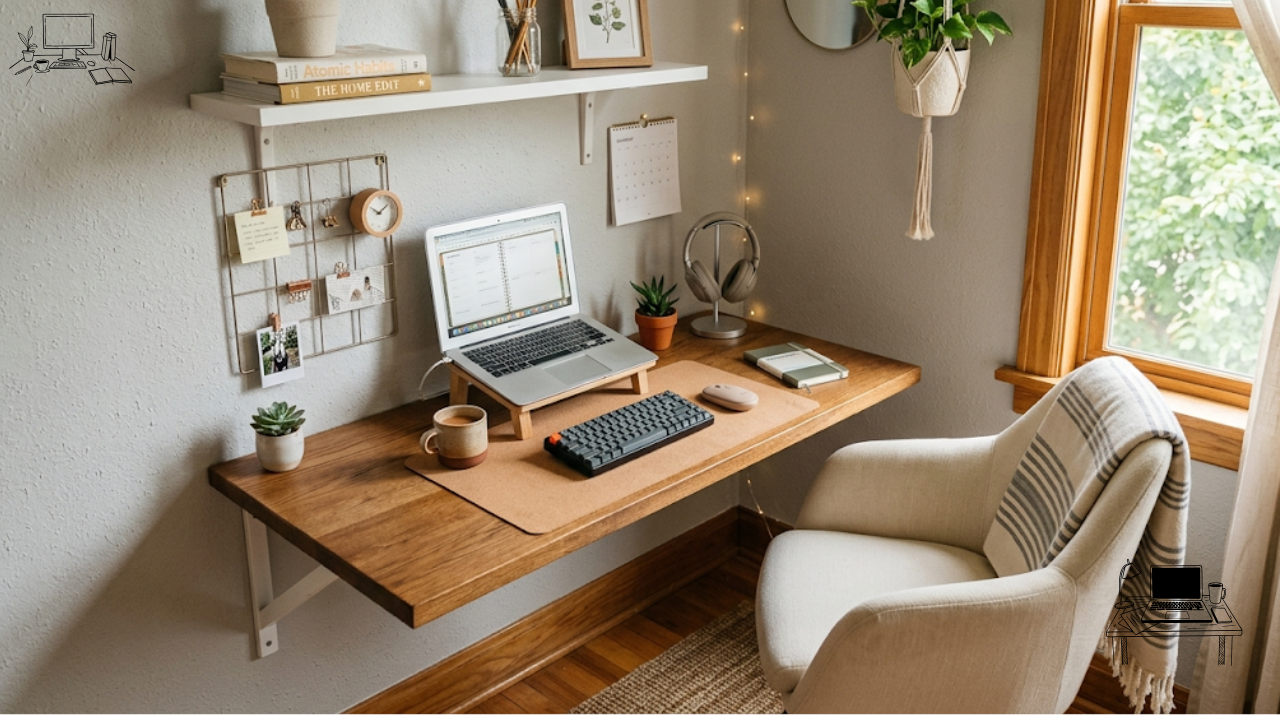
Is your small workspace feeling cramped and uninspiring? You’re not alone. Many people struggle to make their compact offices functional and comfortable.
A well-designed desk setup can transform your entire work experience. This guide offers 12 small work office desk setup ideas to maximize your space. You’ll learn how to create an organized, efficient, and pleasant work environment that boosts productivity and reduces stress.
Get ready to make the most of every square inch!
The 12 Small Work Office Desk Setup Ideas

Creating an effective workspace doesn’t require a large room. Even the smallest office can become a hub of productivity and comfort with the right approach. Many individuals find that a cluttered or poorly organized desk directly impacts their focus and efficiency.
It’s about smart choices that make a big difference. This list explores creative and practical ways to set up your desk, ensuring every item serves a purpose and contributes to a harmonious environment. We’ll cover everything from essential furniture choices to organizational hacks and aesthetic touches that can make your compact office feel much larger and more inviting.
By implementing these strategies, you can transform a tiny corner into a dream workspace.
1. Vertical Storage Solutions
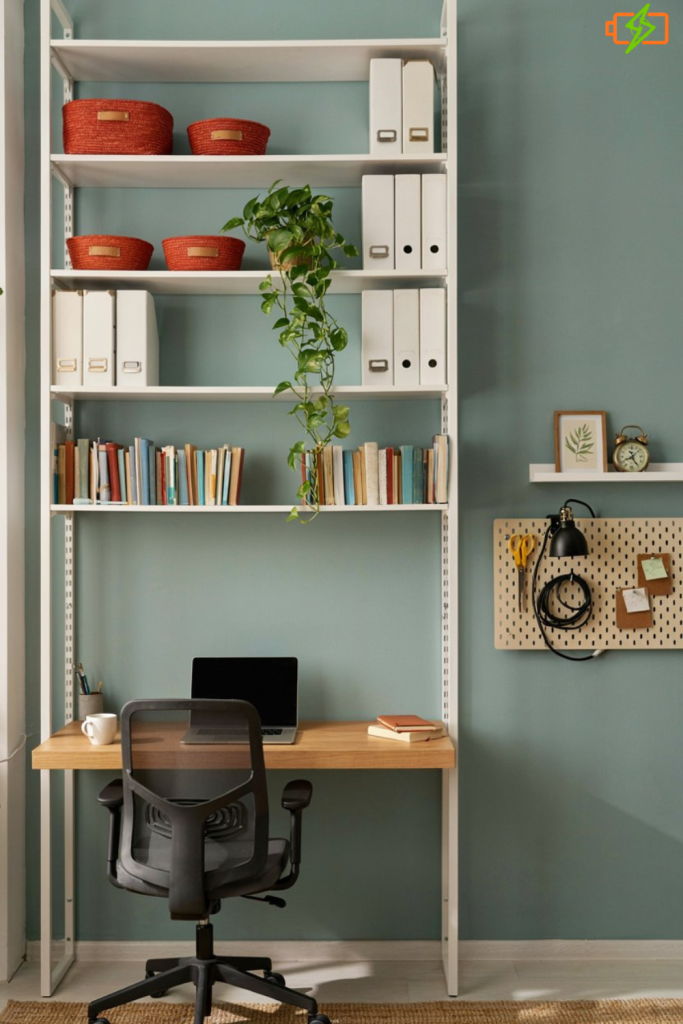
Maximizing vertical space is key when dealing with a small office. Think upwards, not just outwards. Wall shelves, tall bookcases, and tiered desk organizers can hold a surprising amount of items without taking up valuable desk surface.
Floating shelves are excellent because they create storage without obstructing the floor space. They can hold books, decorative items, or even small plants. Look for narrow but tall units.
A slim, high cabinet can store files and supplies. Pegboards are also fantastic for wall organization. You can hang tools, stationery, and small shelves on them.
Consider the types of items you need to store. For documents, consider a wall-mounted file holder. For smaller items like pens, paperclips, and staplers, a multi-tier desk sorter is invaluable.
Even the space above your monitor can be used with a monitor riser that has built-in shelves. These risers lift your screen to an ergonomic height and provide storage underneath. This keeps your main desk clear for active work.
When choosing vertical storage, ensure it matches your desk’s style for a cohesive look.
- Floating shelves can store frequently used items within easy reach. They can be arranged in creative patterns to add visual interest.
- A tall, slim bookcase is ideal for larger items like binders and reference books, helping to keep the floor tidy.
- Pegboards offer versatile storage for office supplies, tools, and even small decorative elements, allowing for easy customization.
One study showed that a decluttered workspace can improve focus by up to 77%. This highlights how effective organization, especially vertical storage, can directly impact work performance. In a small office, every bit of organized space makes a difference.
2. Multi-Functional Furniture
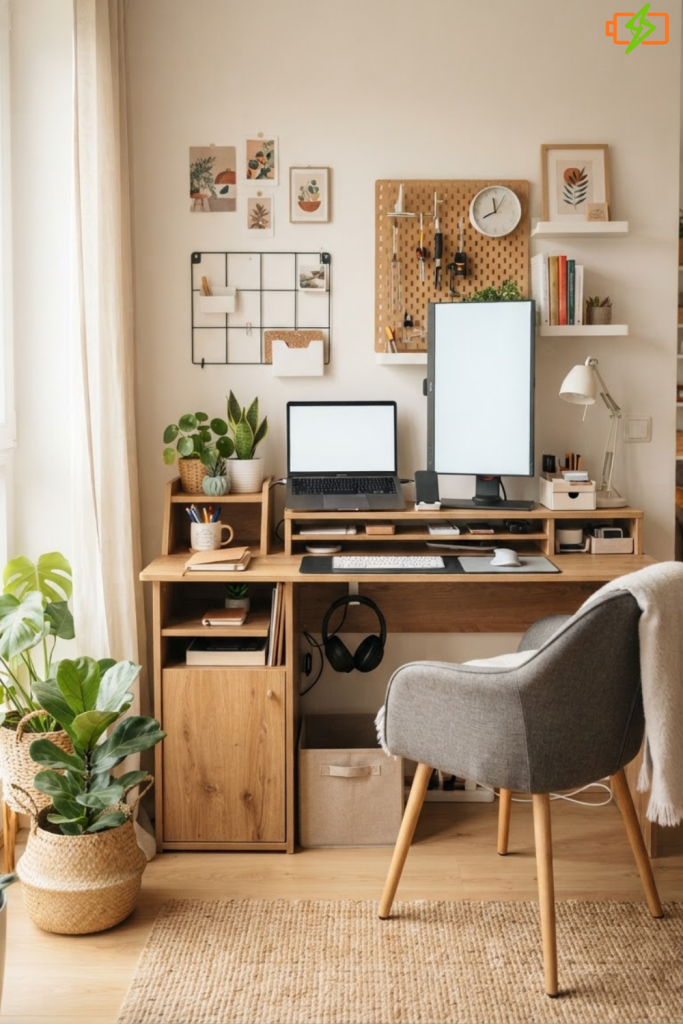
In a compact office, furniture that serves more than one purpose is a lifesaver. A desk that doubles as a storage unit, a chair with built-in drawers, or a printer stand with shelves can significantly reduce the need for separate pieces. For example, a desk with drawers or cubbies built into its frame provides essential storage without adding extra furniture.
Some desks are designed with fold-down surfaces, which can be expanded when needed and tucked away to save space. Look for a comfortable desk chair that also offers storage, perhaps a rolling stool with a compartment beneath the seat. This reduces clutter and keeps items close at hand.
Consider a wall-mounted desk that can fold up when not in use. This is perfect for very tight spaces or for those who only need a desk for occasional use. Another option is a desk with a built-in hutch or shelving unit.
This combines your writing surface with immediate overhead storage, keeping your desk clear. Even small decorative items can serve a dual purpose; a stylish storage box can hold office supplies and add a touch of personality. The goal is to make each piece of furniture work harder for you, consolidating functions and saving precious square footage.
- A desk with integrated drawers or shelving keeps essentials organized and accessible.
- Fold-down or wall-mounted desks are excellent for spaces that need to be reconfigured easily.
- A rolling cart that fits under your desk can serve as extra storage and be moved when needed.
Case Study: Sarah had a small studio apartment where her home office was a corner of the living room. She invested in a desk with a built-in hutch and drawers. She also used a storage ottoman for extra seating and to hold extra notebooks and supplies.
This combination allowed her to keep her work items organized and out of sight when she wasn’t working, making the space feel less like an office and more like a living area.
3. Smart Cable Management
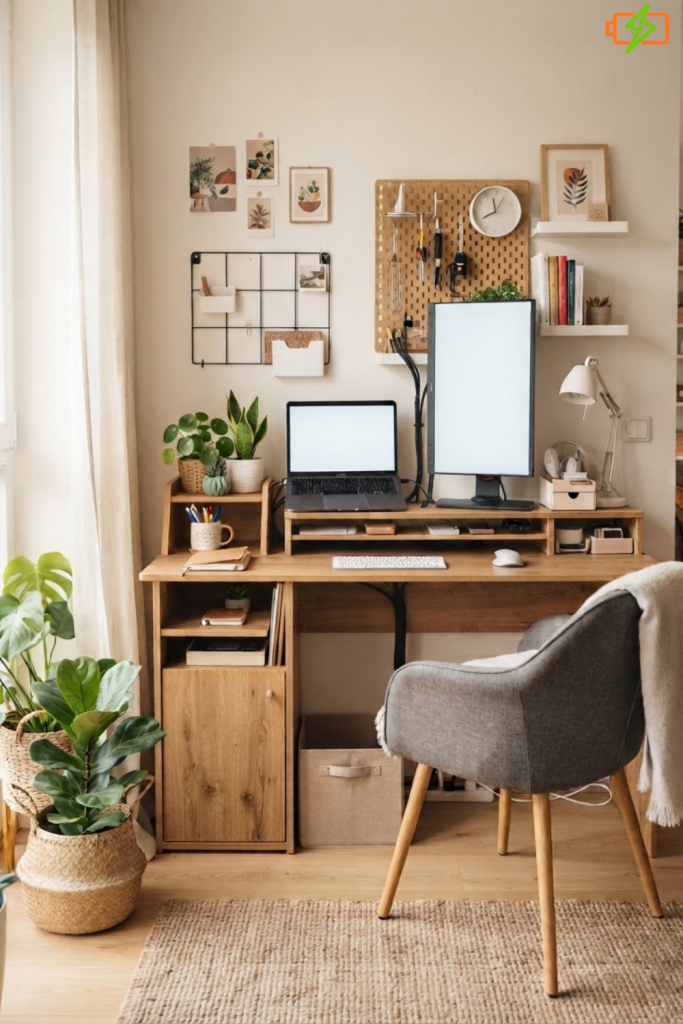
Messy cables can make even the tidiest desk look chaotic and unprofessional. Investing in cable management solutions is essential for a clean and functional small office. Cable clips, ties, sleeves, and raceways can bundle wires together and hide them from view.
A cable management box is a simple yet effective way to contain power strips and excess cords. You can place this box on the floor behind your desk or mount it underneath. Wireless peripherals, such as a mouse and keyboard, can also reduce cable clutter.
Consider a charging station for your devices to keep them organized and powered up without a tangle of cords.
For cables that are frequently used, like those for your monitor or laptop, consider cable sleeves or wraps. These neat bundles of wires are less distracting. You can also use desk grommets or cable pass-throughs if your desk has holes.
These allow cables to go through the desk surface neatly. For a more permanent solution, consider a desk with built-in cable management features, such as channels or holes. Even simple velcro straps can make a huge difference in organizing the cords behind your monitor or computer.
Keeping cables out of sight not only looks better but also prevents accidental unplugging.
- Cable clips and ties can neatly bundle and route wires along the desk legs or back.
- A cable management box hides power strips and excess cord length, creating a cleaner look.
- Wireless peripherals significantly reduce the number of cables running across your desk.
Statistic: A survey found that 88% of people feel more productive in an organized environment. This includes managing visible clutter like cables. Effective cable management is a simple step that contributes significantly to overall office tidiness and focus.
4. Ergonomic Essentials
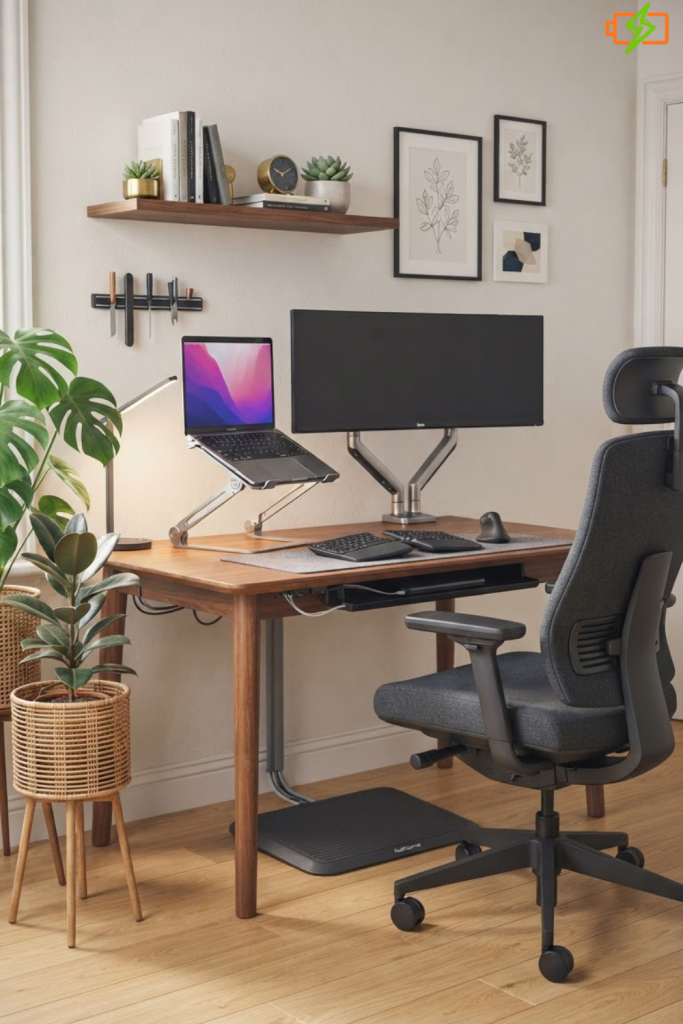
Comfort and health are paramount, especially in a small workspace where you might be spending long hours. An ergonomic setup helps prevent strain and discomfort. This includes an adjustable chair, a monitor at eye level, and a keyboard and mouse that allow for a natural hand position.
Even in a small office, you can achieve this. Invest in a good chair that supports your back. If your desk height isn’t adjustable, use a footrest to maintain proper posture.
A monitor stand or riser is crucial for elevating your screen to the correct height, reducing neck strain.
Ensure your keyboard and mouse are positioned so your elbows are at a 90-degree angle and your wrists are straight. You might need a separate keyboard tray that slides out from under the desk. Consider a laptop stand if you primarily use a laptop, as it allows you to position the screen at eye level and use an external keyboard and mouse.
These accessories take up minimal space but make a significant difference in your physical well-being. An ergonomic setup isn’t just about comfort; it’s about long-term health and sustained productivity. Prioritize these elements even in a compact area.
- An adjustable chair with good lumbar support is essential for long work sessions.
- Using a monitor stand or riser to bring your screen to eye level reduces neck and shoulder strain.
- Position your keyboard and mouse to maintain neutral wrist posture, preventing carpal tunnel issues.
Sample Scenario: John often experienced back pain after working at his small home desk. He realized his chair lacked support and his monitor was too low. He invested in an ergonomic chair with adjustable lumbar support and a monitor riser.
He also started using a small footrest. Within a week, his back pain significantly reduced, and he felt more energized throughout the workday.
5. Strategic Lighting
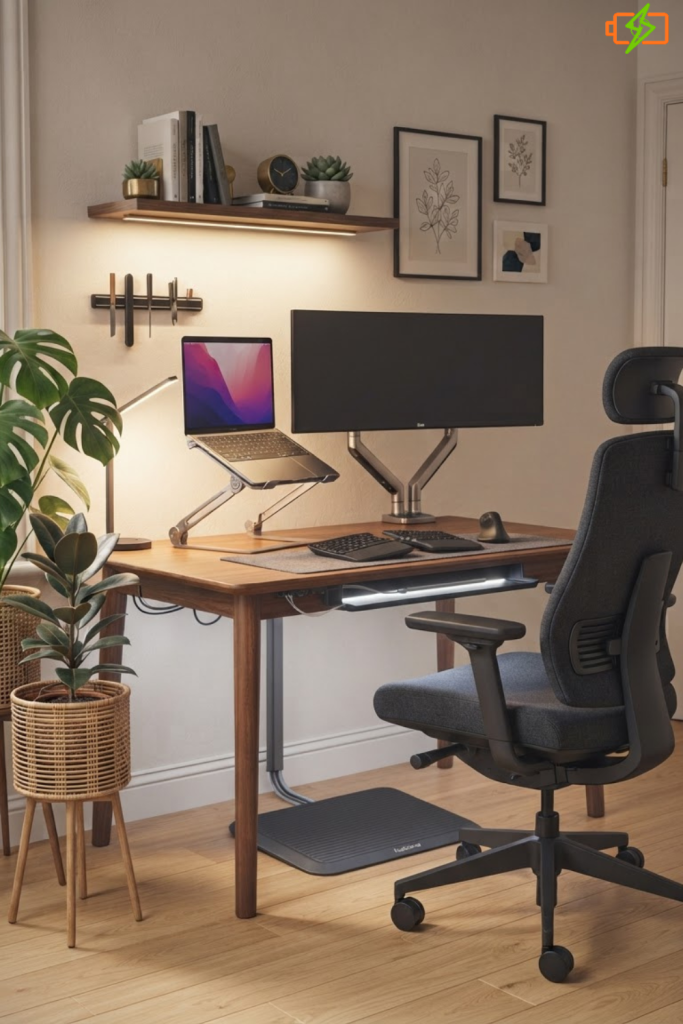
Proper lighting can dramatically impact your mood, energy levels, and productivity in a small office. Natural light is ideal, so position your desk near a window if possible. If natural light is limited, use a combination of ambient and task lighting.
A desk lamp provides focused light for reading or detailed work, preventing eye strain. Choose a lamp with adjustable brightness and a flexible arm so you can direct light precisely where you need it. Avoid overhead lights that can create glare on your screen.
Consider LED bulbs, which are energy-efficient and provide a clean, bright light.
Ambient lighting, like a floor lamp or wall sconces, can create a softer, more diffused glow that reduces contrast and makes the space feel more comfortable. Smart bulbs that allow you to adjust color temperature can be beneficial. Warmer tones can create a cozy atmosphere, while cooler tones can enhance focus.
Even a small mirror strategically placed can help reflect natural light, making the space feel brighter and larger. Good lighting is not just functional; it contributes to the overall ambiance of your workspace. It can help prevent fatigue and boost your mood, making work more enjoyable.
- Position your desk to maximize natural light, but avoid direct glare on your screen.
- A good quality desk lamp provides essential focused light for tasks, reducing eye strain.
- Consider ambient lighting like a floor lamp to create a softer, more comfortable atmosphere.
Statistic: Studies suggest that adequate lighting can increase productivity by up to 20%. This highlights how a simple adjustment like strategic lighting can have a significant positive impact on work output in any office size.
6. Minimalist Desk Surface
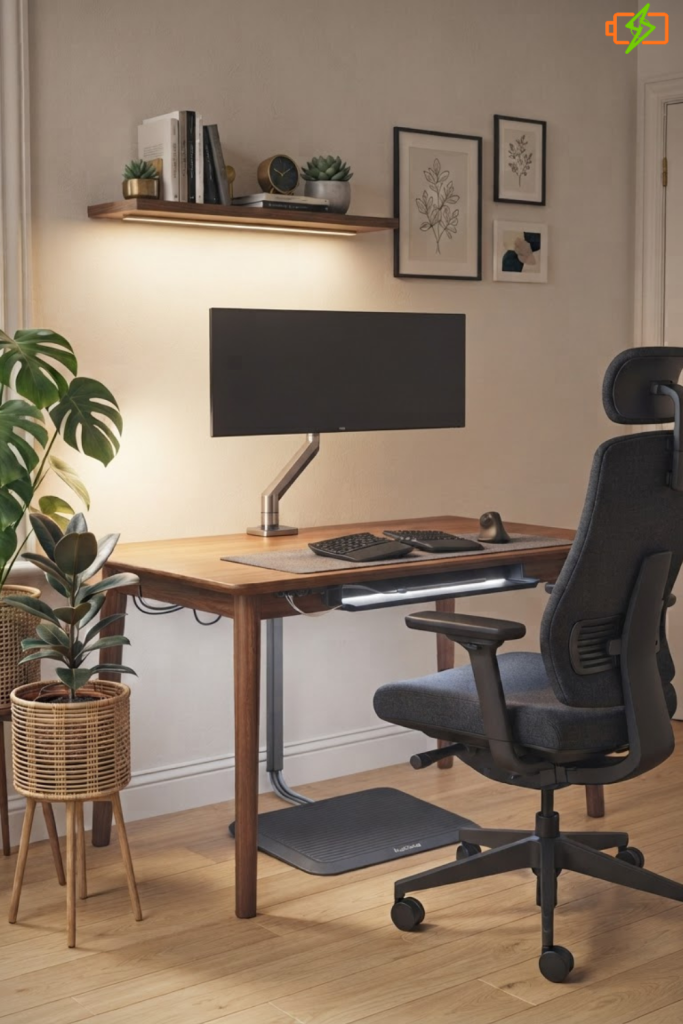
The less clutter on your desk, the more focus and peace you’ll experience. A minimalist approach to your desk surface is crucial for small spaces. Keep only essential items within immediate reach.
Store less frequently used items in drawers, shelves, or a nearby cabinet. This means only your computer, keyboard, mouse, a notebook, and a pen should be on the desk during active work. Everything else should have a designated home elsewhere.
This practice helps train your brain to focus on the task at hand, as there are fewer visual distractions.
When choosing items to keep on your desk, opt for sleek, streamlined designs. Instead of a bulky stapler and tape dispenser, consider a compact stapler and a stylish dispenser. A single, elegant pen holder can
- Keep only essential work tools on your desk surface – computer, keyboard, mouse, notepad, pen.
- Opt for streamlined, compact versions of office supplies to save space and reduce visual noise.
- Digital tools can replace many paper-based items, contributing to a cleaner desk.
Real-life Example: Mark adopted a “clean desk policy” for his home office. He dedicated 15 minutes at the end of each workday to put away all items not actively in use. He also invested in a small, aesthetically pleasing organizer for his most-used pens and a slim notebook.
This routine transformed his desk from a chaotic surface to a calm, focused workspace.
7. Compact and Foldable Options
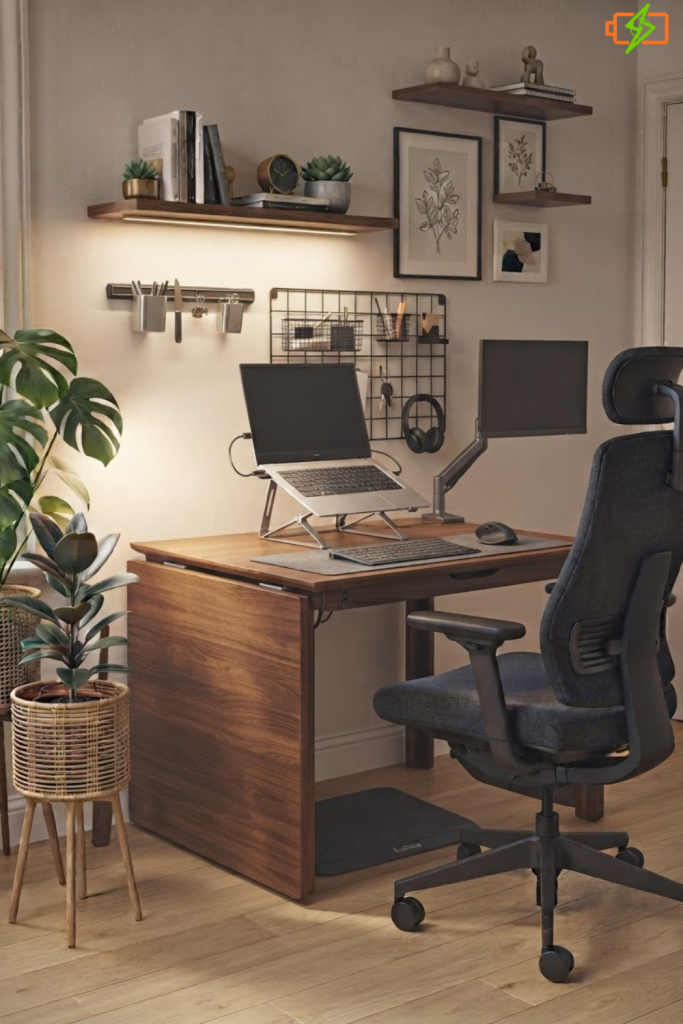
For truly tiny spaces or rooms that serve multiple purposes, foldable furniture is a revelation. A foldable desk can be set up when you need it and folded away to become almost invisible when not in use. This is ideal for studio apartments or multi-use rooms.
Similarly, foldable chairs or stools can be stored easily when not occupied. Think about shelving units that can be collapsed or rolled away. These solutions offer flexibility without permanently sacrificing valuable floor space.
When looking for these items, prioritize stability and ease of use.
Consider a wall-mounted desk that folds down from the wall. This is a very space-efficient solution. When it’s up, it looks like a cabinet or a piece of wall art.
When you need to work, you simply pull it down. Even small accessories can be foldable, like portable document holders or keyboard stands. The key is to choose items that adapt to your needs rather than dictating the space.
This approach allows you to reclaim your room for other activities when work is done, making your small office feel integrated rather than imposed.
- Foldable desks can be easily stored, freeing up space when not in use.
- Collapsible chairs or stools offer flexible seating options that can be tucked away.
- Wall-mounted folding desks provide a work surface without taking up floor space.
Sample Scenario: Emily lives in a small apartment and uses her dining table as her workspace during the day. To keep her dining area functional for meals, she uses a laptop stand that folds flat and a portable keyboard that tucks away easily. At the end of the workday, her laptop is closed, the stand is folded, and the keyboard is put in a drawer, leaving her dining table completely clear.
8. Utilize Wall Space Effectively
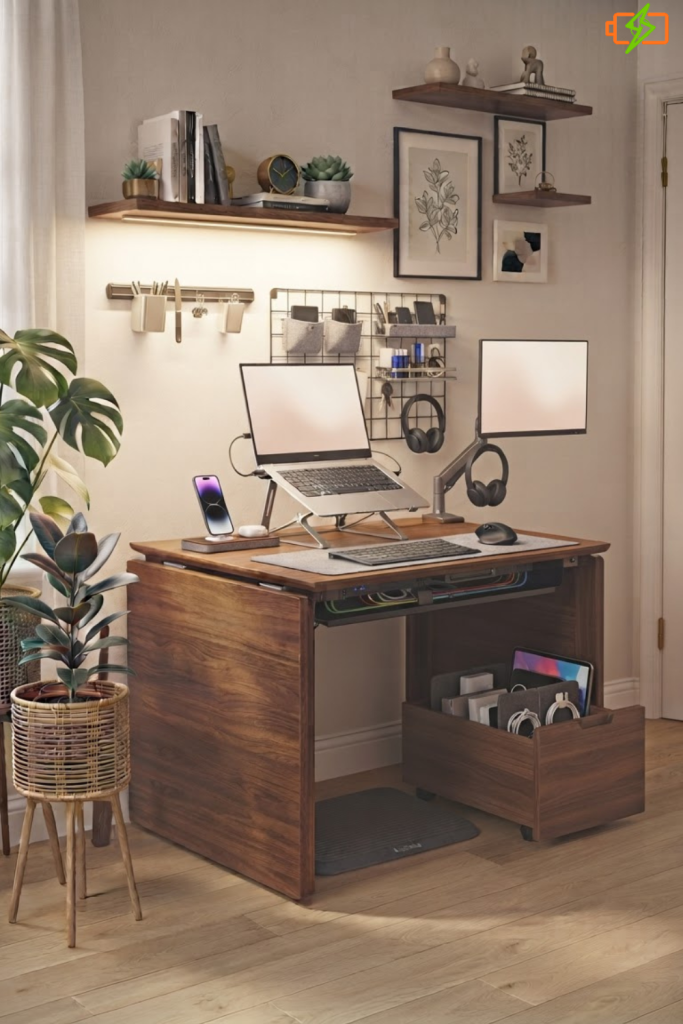
Don’t let your walls go to waste. They offer prime real estate for storage and organization in a small office. Wall-mounted shelves, cabinets, and organizers can hold everything from files and books to stationery and decorative items.
Floating shelves are great for a minimalist look and can hold plants or framed pictures. A wall-mounted desk can be a fantastic space-saving solution. Consider a bulletin board or a magnetic whiteboard for notes, reminders, and inspiration.
These visual tools keep important information visible without cluttering your desk surface.
Think about pegboards, which are incredibly versatile. You can hang various holders for pens, scissors, notebooks, and even small shelves. This allows you to customize your storage easily and keeps items organized and within reach.
Wall-mounted file holders are perfect for keeping important documents tidy. Even the space above your door can be utilized with a small shelf for less frequently accessed items. Maximizing wall space is about using the full height of your room, drawing the eye upwards and making the space feel larger and more organized.
- Wall shelves provide ample storage for books, files, and decorative items.
- Pegboards offer customizable organization for a wide range of office supplies.
- Bulletin boards or whiteboards keep important notes and reminders visible.
Real-life Example: David transformed the wall above his desk into a functional command center. He installed a large corkboard for pinning important notes and inspirational quotes, a magnetic whiteboard for daily tasks, and several floating shelves for books and small plants. This kept his desk clear while ensuring everything he needed was easily accessible and visible.
9. Color and Light to Create Space
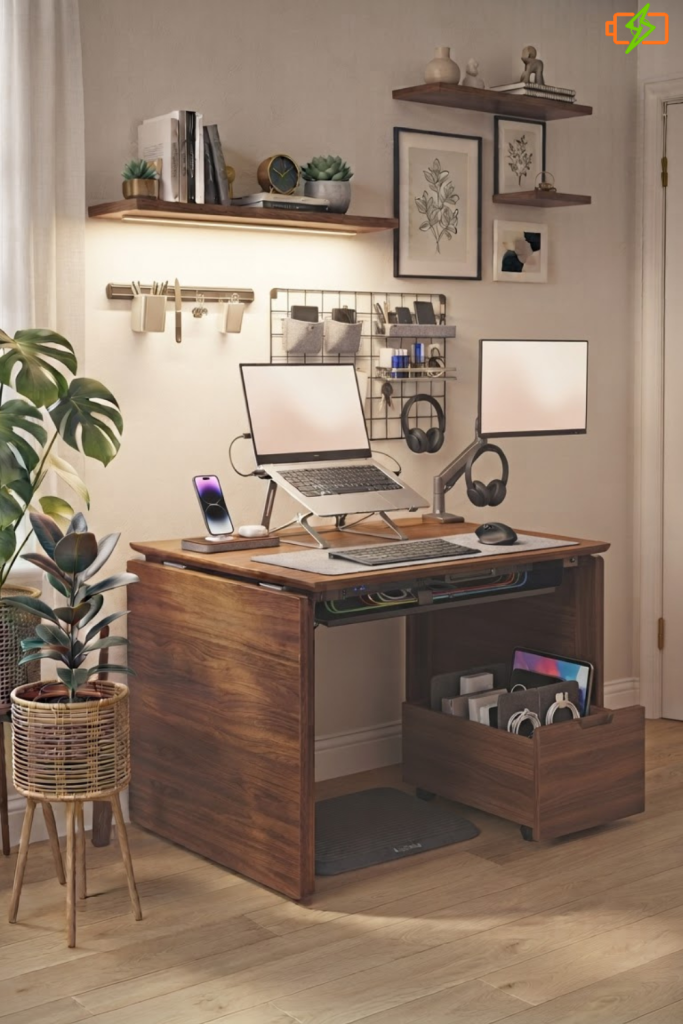
The colors and amount of light in your small office can significantly influence how spacious it feels. Light, neutral colors on the walls and furniture can make a room appear larger and more open. Think whites, creams, light grays, or soft pastels.
These colors reflect light, making the space feel brighter and more airy. Avoid dark, heavy colors that can make a small room feel enclosed. Strategic use of mirrors can also create the illusion of more space by reflecting light and the room itself.
Natural light is your best friend. Position your desk near a window if possible and keep window treatments light and airy. If natural light is limited, ensure you have good artificial lighting.
A combination of ambient and task lighting can make the space feel welcoming and functional. Avoid harsh, fluorescent lighting, which can make a small space feel sterile. Instead, opt for warmer LED bulbs or soft, diffused lighting.
The overall goal is to create an environment that feels bright, open, and inviting, using color and light as tools to enhance the perception of space.
- Light paint colors on walls and furniture make a small room feel larger.
- Maximize natural light by positioning your desk near a window and using light window coverings.
- Mirrors can create the illusion of more space by reflecting light and the room.
Statistic: Rooms painted in lighter colors can appear up to 10% larger than those painted in darker colors. This psychological effect is a powerful tool for small office design.
10. Smart Storage for Electronics
Electronics can quickly become a source of clutter in a small office. Smart storage solutions are needed to keep them organized and accessible. This includes cable management, as mentioned before, but also dedicated spots for devices.
A charging station can keep all your devices powered up and neatly stored in one place. Consider a monitor riser with built-in storage or compartments for your laptop, tablet, or external hard drives. Wall-mounted charging hubs can keep your devices off the desk surface entirely.
For items like printers, scanners, or external hard drives, consider a small printer stand with shelves or a cabinet that can house them. If they are not used daily, they can be stored away in a closet or cabinet. Even a simple shelf above your desk can be used to store a tablet or a second monitor when not in use.
The goal is to give every electronic device a specific place, preventing them from accumulating on your desk or floor. This keeps your workspace tidy and functional, making it easier to find what you need when you need it.
- A dedicated charging station can keep all your devices organized and powered.
- Monitor risers with storage compartments can house smaller electronics like laptops or tablets.
- Wall-mounted solutions can keep devices off the desk and out of sight when not in use.
Case Study: Maria struggled with the clutter of her various electronic devices. She purchased a multi-device charging station that neatly held her phone, tablet, and earbuds, all while managing their cables. She also found a compact printer stand with a shelf underneath, which housed her printer and extra ink cartridges, clearing up her desk space.
11. Incorporate Natural Elements
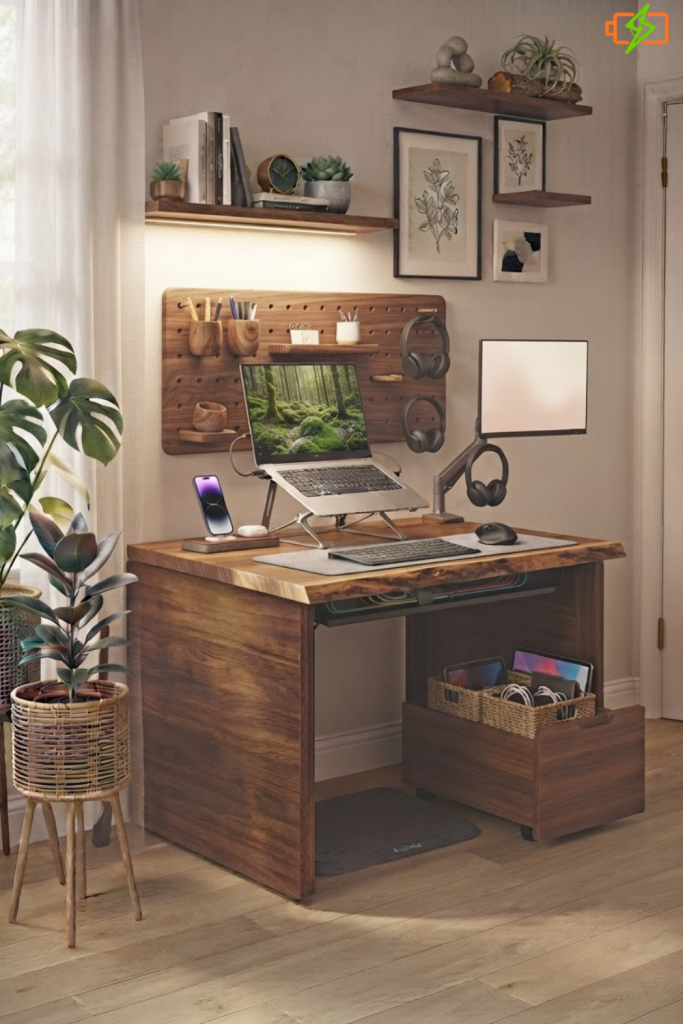
Bringing elements of nature into your small office can make it feel more serene, productive, and spacious. Plants are an excellent way to add life and color without taking up much room. Small potted plants on your desk, shelves, or even hanging plants can improve air quality and reduce stress.
Consider low-maintenance plants like succulents or snake plants that don’t require much attention. Natural materials, such as wood or bamboo, in your furniture or accessories can also create a warmer, more inviting atmosphere.
Even small touches can make a difference. A desktop organizer made of wood, a picture frame with a nature scene, or a small water feature can contribute to a calming environment. The goal is to create a connection to the outdoors, which can be particularly beneficial in a confined indoor space.
Natural light, as discussed earlier, is a key component, but the incorporation of natural materials and living elements further enhances the sense of well-being and spaciousness. These elements can transform a functional workspace into a more enjoyable and inspiring place to be.
- Small plants add life and color, improving air quality and reducing stress.
- Natural materials like wood or bamboo in furniture can create a warmer feel.
- Even small decorative items with nature themes can enhance the ambiance.
Statistic: Indoor plants can improve air quality and have been shown to reduce stress and increase feelings of well-being by up to 37%. This makes them a valuable addition to any workspace, especially small ones.
12. Declutter Regularly
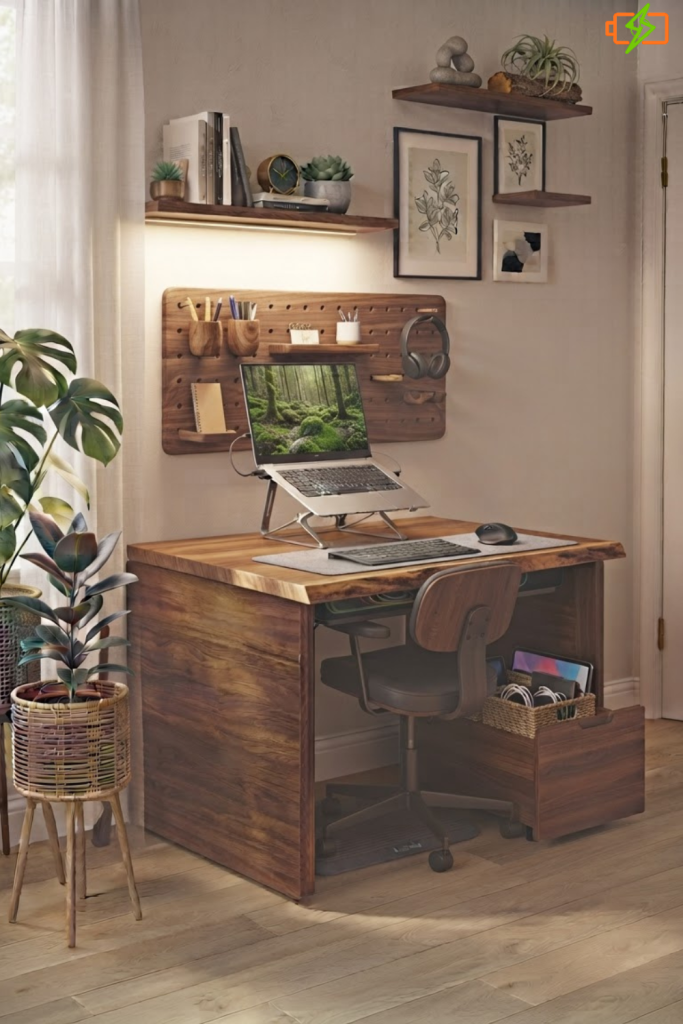
The most important tip for any small office is to declutter regularly. Even with the best setup, clutter can accumulate quickly. Make it a habit to go through your desk and surrounding area at the end of each week, or even daily.
File away papers, put items back in their designated storage spots, and discard anything you no longer need. A clean workspace leads to a clear mind, enhancing focus and productivity. Don’t let “out of sight, out of mind” become “out of sight, out of mind but still creating mental clutter.”
Schedule dedicated time for decluttering. This could be 15 minutes at the end of the day or an hour at the end of the week. Be ruthless about what you keep.
If you haven’t used something in six months, consider whether you truly need it. Utilize the “one in, one out” rule for new purchases – for every new item that comes into your office, remove an old one. This discipline is crucial for maintaining a functional and peaceful small workspace.
A tidy environment makes it easier to find what you need and reduces the feeling of being overwhelmed.
- Schedule regular decluttering sessions to maintain organization.
- Be ruthless about discarding items you no longer need or use.
- The “one in, one out” rule can help prevent clutter from accumulating.
Real-life Example: Sarah scheduled a 30-minute “office reset” every Friday afternoon. She would file any loose papers, organize her desk drawers, and discard any unnecessary items. This consistent habit prevented her small workspace from becoming overwhelmed with clutter and ensured she started each week with a clean and organized desk.
Frequently Asked Questions
Question: How can I make a very small desk feel less cluttered?
Answer: Use vertical storage, such as wall shelves or monitor risers with built-in compartments. Keep only essential items on the desk surface and manage cables neatly. Opt for minimalist accessories and declutter regularly.
Question: What is the best color to paint a small office for a spacious feel?
Answer: Light, neutral colors like white, cream, light gray, or soft pastels are best. They reflect light and make the room appear larger and more open.
Question: How can I improve lighting in a dark small office?
Answer: Maximize natural light, use a good desk lamp for task lighting, and consider ambient lighting like a floor lamp. Warm LED bulbs can create a more inviting atmosphere.
Question: Is it worth investing in multi-functional furniture for a small office?
Answer: Yes, multi-functional furniture is highly recommended for small offices. It consolidates storage and usage, saving space and reducing the need for multiple items.
Question: How often should I declutter my small office desk?
Answer: Regular decluttering is key. Aim for a quick tidy-up daily and a more thorough decluttering session weekly. Consistency prevents clutter from building up.
Conclusion
Creating an effective small work office desk setup involves smart strategies for organization and space utilization. By focusing on vertical storage, multi-functional furniture, and cable management, you maximize every inch. Prioritizing ergonomics, lighting, and natural elements enhances comfort and ambiance.
Regular decluttering and minimalist design keep your workspace focused and inspiring. These ideas help transform any small area into a productive and pleasant office.