
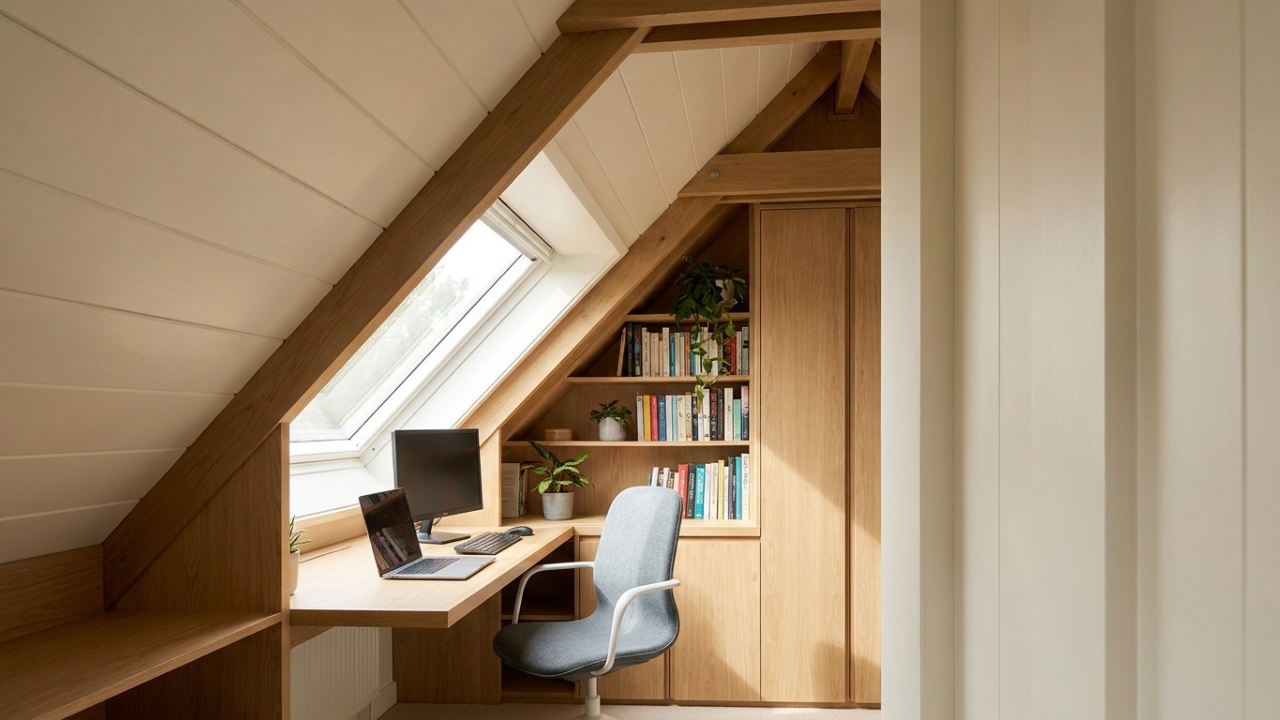
Making a small space feel like a real work area can be tricky, especially when you have a sloped ceiling. Many beginners find attic office ideas sloped ceiling cozy workspace challenging because they aren’t sure how to use the angled walls. It might seem hard to fit furniture or make it feel bright and welcoming.
But don’t worry! We’ll show you simple ways to make your attic office perfect. Get ready to see how easy it is to create a comfortable and functional space.
The 12 Cozy Attic Office Ideas For Sloped Ceilings
Creating a home office in your attic, especially one with a sloped ceiling, presents unique opportunities to transform an often-underused space into a productive and inspiring retreat. The charm of an attic office lies in its intimate feel and often picturesque eaves. However, the irregular shape, particularly the low ceilings and angled walls, can make it seem like a puzzle to solve.
This is where thoughtful planning and creative solutions come into play. We’ll explore how to maximize every inch, bring in light, and curate a cozy atmosphere that makes working from your attic a pleasure, not a pain.
1. Embrace the Angles With Built-In Furniture
Sloped ceilings can be your best friend when you decide to build furniture that fits snugly against them. Instead of fighting the angles, work with them! Custom-built desks, shelves, and storage units can be designed to follow the natural slope of your attic walls.
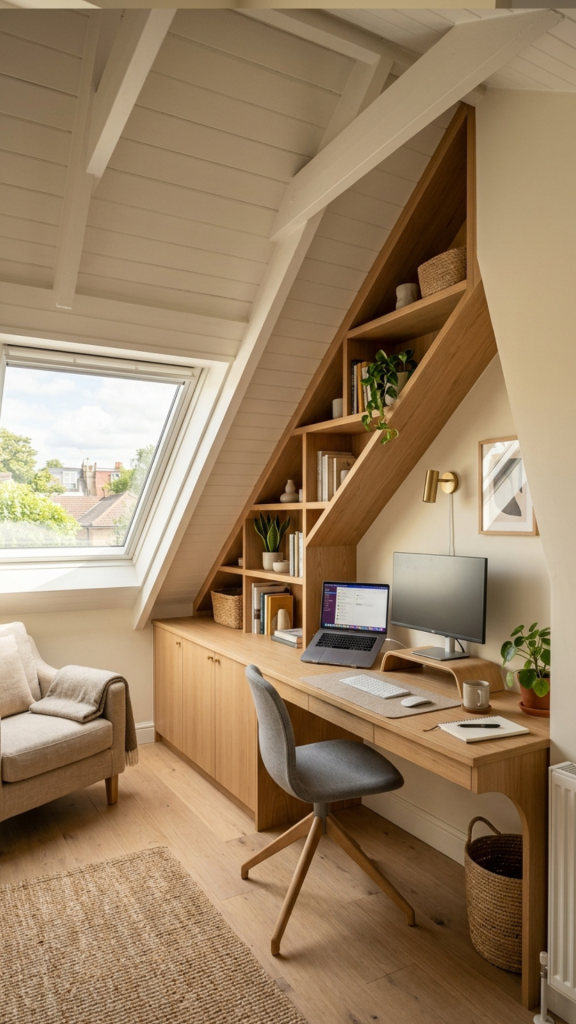
This maximizes usable space and creates a seamless look. For example, a desk can be built with its surface at a comfortable height, with cabinets or shelves extending upwards to meet the ceiling’s angle. This prevents wasted space that would occur with standard furniture.
When designing built-in furniture, consider the exact measurements of your sloped ceiling. It is wise to measure the height at various points to ensure a perfect fit. This also helps you determine the optimal height for your desk and any seating you plan to include.
Think about the materials you want to use. Wood is a popular choice for its warmth and durability, but you could also consider materials like MDF for a more budget-friendly option. The finish you choose will also impact the overall feel of your attic office.
Benefits of Built-In Furniture
- Space Maximization Built-in units are designed to fit perfectly into odd nooks and crannies created by sloped ceilings. This means you don’t lose valuable floor space to bulky, ill-fitting standard furniture.
- Customization You can design the furniture to suit your specific needs and aesthetic preferences. This includes the height, depth, and style of the pieces, ensuring a functional and personalized workspace.
- Aesthetic Cohesion Built-ins create a streamlined and integrated look, making the space feel more intentional and less cluttered. The furniture becomes a natural extension of the room’s architecture.
A case study from a homeowner in the Pacific Northwest showed a remarkable transformation. They had an attic room with a very low slope on one side. By installing a custom desk that hugged the wall at the lowest point and then extending a bookshelf unit up the higher slope, they created a functional workspace that felt intentional.
The desk’s depth was kept shallow, so it didn’t encroach on the walking path, and the bookshelf held all their essentials without making the room feel cramped.
2. Strategic Lighting for Brightness
Attics are often dark, so good lighting is key. Since you can’t always put in large windows, think about artificial light. Use a mix of ambient, task, and accent lighting to make the space feel bright and inviting.
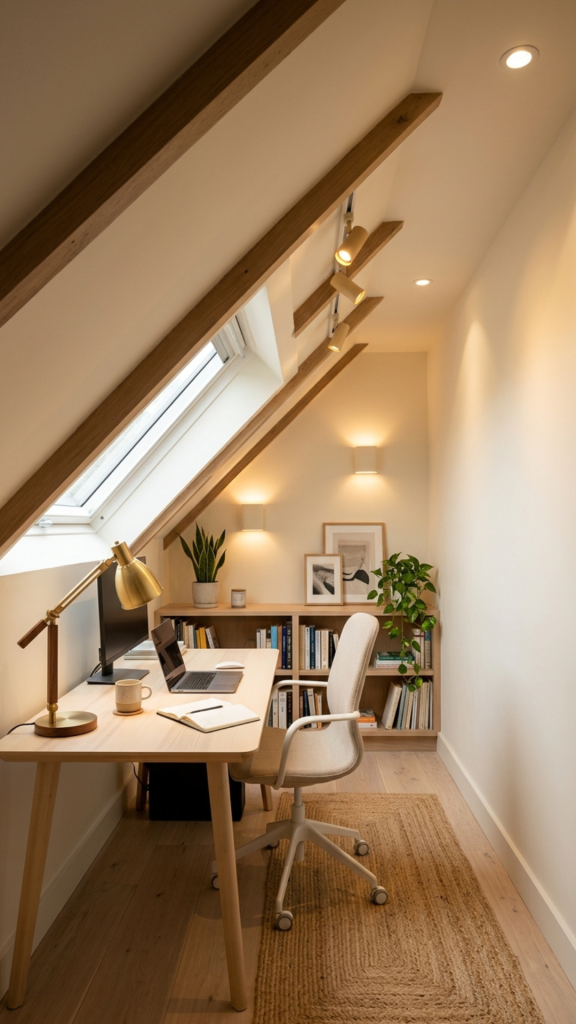
Ambient lighting provides overall illumination, like ceiling lights or wall sconces. Task lighting is crucial for your desk area, such as a good desk lamp. Accent lighting can highlight artwork or architectural features, adding warmth and character.
Consider installing track lighting or recessed lights in the highest part of the ceiling. These can be directed to illuminate the workspace evenly. For areas with lower slopes, wall-mounted sconces or adjustable floor lamps can provide focused light without taking up desk space.
Using warm-toned bulbs (around 2700K to 3000K) can create a cozier atmosphere, while cooler tones might be better for task lighting to aid concentration. Natural light is always preferred, so if you can add a skylight or a dormer window, it will make a huge difference.
Lighting Solutions
- Skylights and Sun Tunnels If structurally possible, adding a skylight or a sun tunnel can dramatically increase natural light. This is the most effective way to brighten a dark attic space and make it feel more open and airy.
- Recessed and Track Lighting These are excellent for providing overall illumination. Recessed lights sit flush with the ceiling, while track lights offer flexibility in directing light where it’s needed most.
- Task and Accent Lamps A good desk lamp is essential for focused work. Accent lamps, like small table lamps or wall sconces, can add warmth and mood lighting to the space.
One homeowner found that by installing two solar tube skylights, their attic office went from dim to delightful. The natural light made the space feel much larger and more pleasant for long work sessions. They also added a bright LED desk lamp for evenings and cloudy days, ensuring they always had enough light to see clearly.
Statistics show that adequate lighting can improve productivity by up to 20%. A study by the University of South Dakota found that natural light exposure in offices is linked to better sleep patterns and increased alertness.
3. Creative Wall and Ceiling Treatments
The walls and ceiling of an attic office can be a canvas for creativity. Instead of trying to hide the slopes, highlight them! Painting the walls a light, neutral color can make the space feel bigger and brighter.
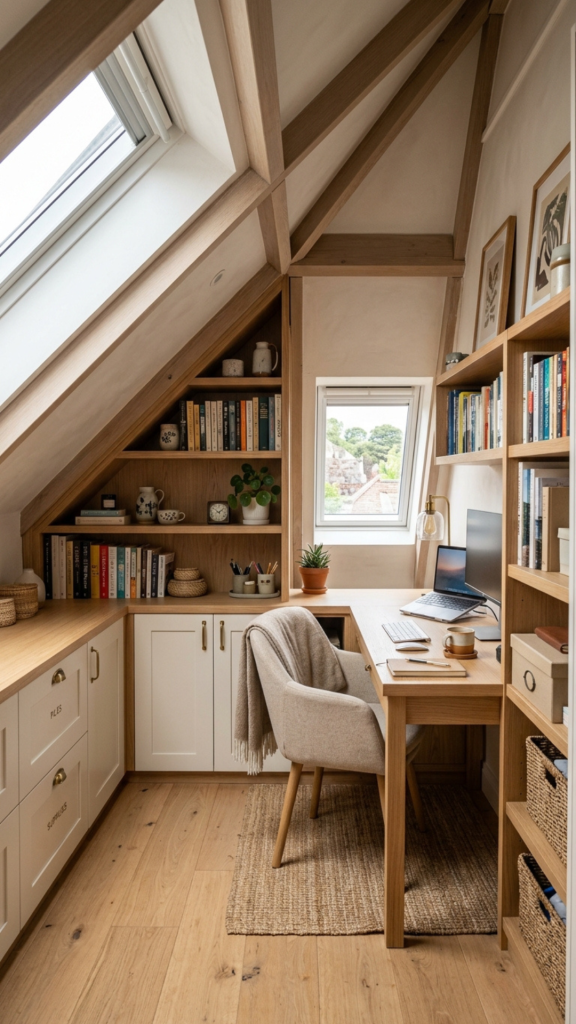
White, light gray, or pale blues are excellent choices. You can also use wallpaper with a subtle pattern to add visual interest. For the ceiling, consider painting it a slightly darker shade than the walls to create a cozy, enveloping feel, or paint it the same color as the walls to make the space appear more expansive.
Another idea is to use wood paneling or shiplap on the sloped walls. This can add texture and warmth, creating a rustic or Scandinavian feel. If you have exposed beams, embrace them!
You can paint them a contrasting color or leave them natural wood for a charming, rustic look. Consider a feature wall behind your desk; this could be a bold color, a textured wallpaper, or even a large piece of art. This draws the eye and creates a focal point.
Design Ideas
- Light Color Palette Using light colors on walls and ceilings makes the attic feel larger and airier. White, off-white, and pastel shades are ideal for reflecting light and opening up the space.
- Accent Walls A single accent wall, perhaps on the highest part of the slope, can add personality. This could be a bold color, a textured wallpaper, or wood paneling.
- Exposed Beams If your attic has exposed beams, embrace their rustic charm. You can paint them, stain them, or leave them natural to add character and architectural interest.
A blogger shared how she used a light sage green paint on her attic office walls and a crisp white on the ceiling. She then added a wooden accent wall behind her desk, made from reclaimed pallet wood. This combination made her small attic office feel both calming and chic, a perfect blend of cozy and functional.
4. Smart Storage Solutions
Storage is a critical consideration in any office, but especially in an attic where space is at a premium. Think vertically and use every available inch. Wall-mounted shelves are fantastic for books, files, and decorative items.
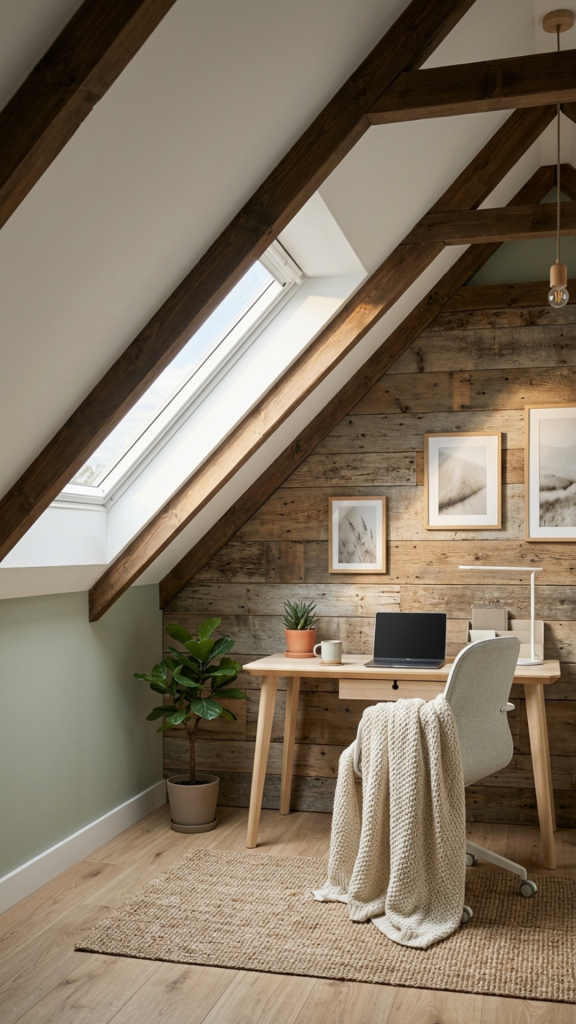
Under-desk drawers and cabinets help keep your workspace tidy. Consider a long, shallow cabinet that fits perfectly under a low-sloped section of the wall. This provides ample storage without obstructing headroom.
For awkward corners or low eaves, modular storage units can be a lifesaver. These can be stacked and arranged to fit the specific dimensions of your attic. Rolling carts are also great because they can be moved out of the way when not in use.
Don’t forget the space under your desk; even a few inches can accommodate pull-out drawers or bins. If you have the budget, custom built-ins are the ultimate solution for maximizing storage in a sloped-ceiling attic.
Storage Strategies
- Vertical Shelving Utilize wall space with shelves. Mount them high to take advantage of vertical space, keeping the lower areas clear. Open shelves can display decor, while closed cabinets hide clutter.
- Under-Eave Storage Custom-built units or pre-fabricated modular systems can fit perfectly into the low areas under the eaves, providing valuable storage without sacrificing usable space.
- Desk Organizers Keep your desk tidy with drawer inserts, desktop organizers, and file holders. This small step makes a big difference in maintaining a functional workspace.
One person found success with shallow, pull-out drawers installed along the base of their sloped wall. This allowed them to store office supplies and seasonal items without taking up much space or being a hazard. They also used stackable bins on higher shelves for less frequently used items.
5. Flexible and Multifunctional Furniture
In a smaller attic office, furniture that serves multiple purposes is a smart choice. A desk with integrated shelving or drawers saves space. A rolling cart can act as a printer stand, a mobile filing cabinet, or an extra work surface.
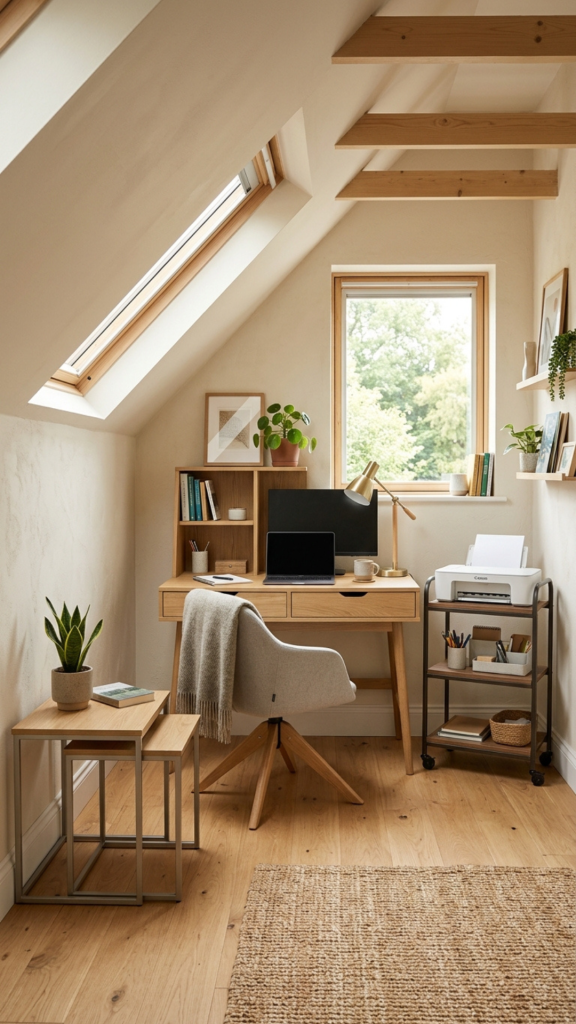
Consider a comfortable chair that is also easy to move or fold away if needed. If you sometimes need a space for brainstorming or quick meetings, a small, foldable table can be a great addition.
Think about how you use your workspace. Do you need room for a large monitor? Or is your work primarily on a laptop?
This will influence the size and type of desk you choose. If you have a particularly low section of the attic, you might opt for floor cushions and a low table for a more relaxed work or reading nook. The key is to choose pieces that are proportional to the space and can adapt to your changing needs.
Multipurpose Furniture Tips
- Convertible Desks Look for desks that have built-in storage, like drawers or shelves, or desks that can fold up or slide away when not in use.
- Rolling Carts These are incredibly versatile. Use them for storing printers, paper, or supplies. They can also serve as a temporary work surface or a way to keep frequently used items accessible.
- Nesting Tables A set of nesting tables can be pulled out for extra surface area when needed and tucked away neatly when not in use, making them perfect for small or multi-use spaces.
A graphic designer found their attic office was much more functional after switching to a desk with a built-in hutch. This kept their monitor, computer, and essential reference books elevated, freeing up valuable desk surface space for drawing and sketching. They also incorporated a rolling cart to hold their extensive collection of art supplies.
6. Utilize the Sloped Walls for Visual Interest
Instead of seeing sloped walls as a limitation, view them as an opportunity to add visual interest and character. You can treat the sloped walls as a backdrop for your workspace. Consider hanging artwork, photos, or even a pegboard for organizing tools and supplies.
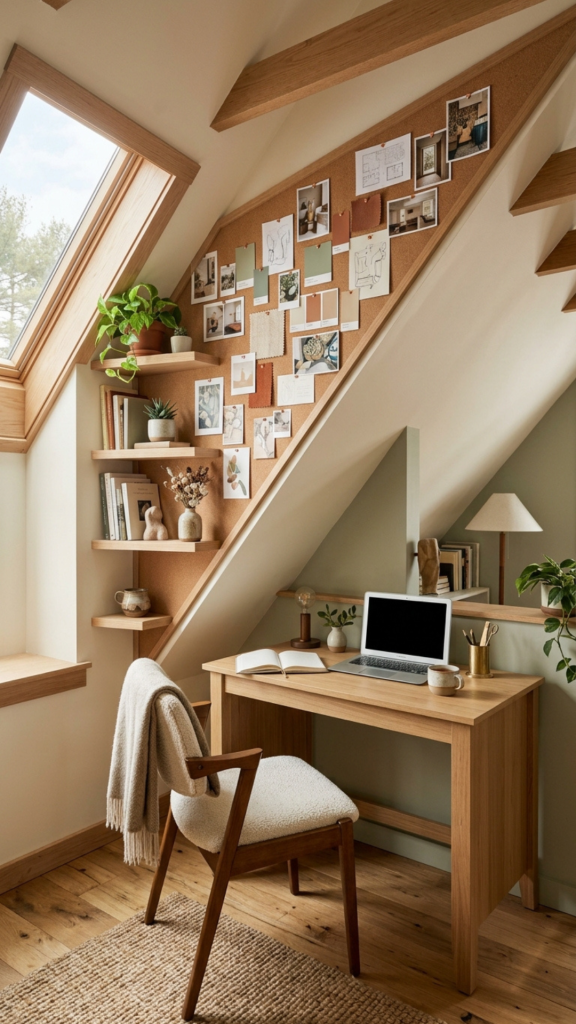
This adds personality and makes the space feel more dynamic. If the slope is severe, you might even consider building a custom gallery wall that follows the angle.
Another approach is to use the sloped sections for inspiration. You could mount a whiteboard or a corkboard on a gently sloped wall for brainstorming ideas. For very low slopes, consider installing shallow shelves that can hold decorative items, small plants, or books.
This turns a potentially awkward architectural feature into a functional and aesthetically pleasing element of your office design. The key is to be creative and think about how these surfaces can enhance your work environment.
Wall Treatment Ideas
- Decorative Shelving Install shallow shelves along the sloped walls to display plants, art, or books. This adds visual appeal and utilizes otherwise dead space.
- Pegboards and Wall Organizers A pegboard is ideal for storing office supplies, tools, or craft items. It can be customized with hooks, shelves, and containers to suit your needs.
- Art and Photo Displays Hang framed art, photos, or even a collection of inspirational quotes on the sloped walls. This personalizes the space and makes it more inviting.
A writer decided to create a “vision board” on one of her attic office’s sloped walls. She used a large corkboard that followed the angle and filled it with inspiring images, quotes, and project ideas. This not only made the wall interesting but also served as a constant source of motivation for her work.
7. Maximize Natural Light with Mirrors
Mirrors are a fantastic tool for making any space feel larger and brighter, and this is especially true in an attic office with limited natural light. Strategically placed mirrors can reflect light from windows or lamps, bouncing it around the room and creating an illusion of more space. A large mirror hung on a wall opposite a window can dramatically amplify the natural light.
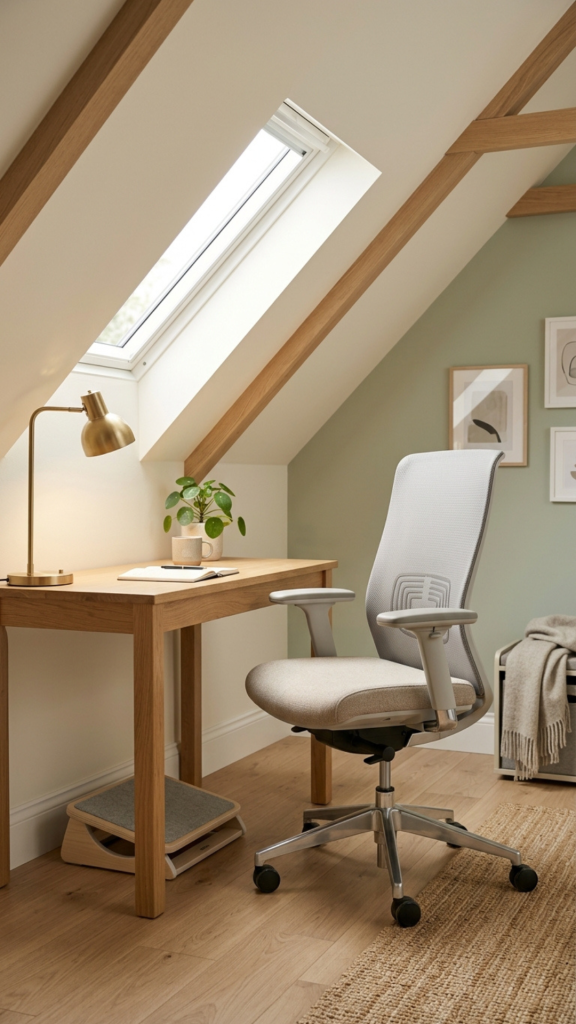
Even a series of smaller mirrors can create a dazzling effect and make the room feel more open and airy.
Consider the type of mirror you use. A simple, frameless mirror will provide a clean, modern look, while a mirror with an ornate frame can add a touch of elegance or vintage charm. If you have a particularly low-sloped ceiling, a mirror placed at eye level can help draw the eye upwards, making the ceiling feel higher.
Think about the reflections you want to create. Positioning a mirror to reflect a view or an interesting feature can add depth and visual interest to your attic workspace. Be mindful of glare, however, and position them to avoid direct, harsh reflections on your computer screen.
Mirror Placement Tips
- Opposite Windows Placing a mirror directly across from your main light source will reflect the maximum amount of natural light back into the room. This is the most effective way to brighten a dark area.
- In Corners A mirror placed in a corner can help to visually “open up” that space and make it feel less confined. It can also reflect light from multiple sources.
- Near Your Desk A strategically placed mirror near your desk can make the workspace feel larger and more dynamic. It can also provide a quick glance to check your appearance before video calls.
One homeowner reported a significant improvement in their attic office’s ambiance after hanging a large floor mirror near their main window. They said it made the room feel twice as big and much more pleasant to work in, even on overcast days.
8. Create Zones for Different Activities
Even in a small attic office, you can create distinct zones for different activities. This helps to improve focus and organization. For instance, designate a primary work zone with your desk and computer.
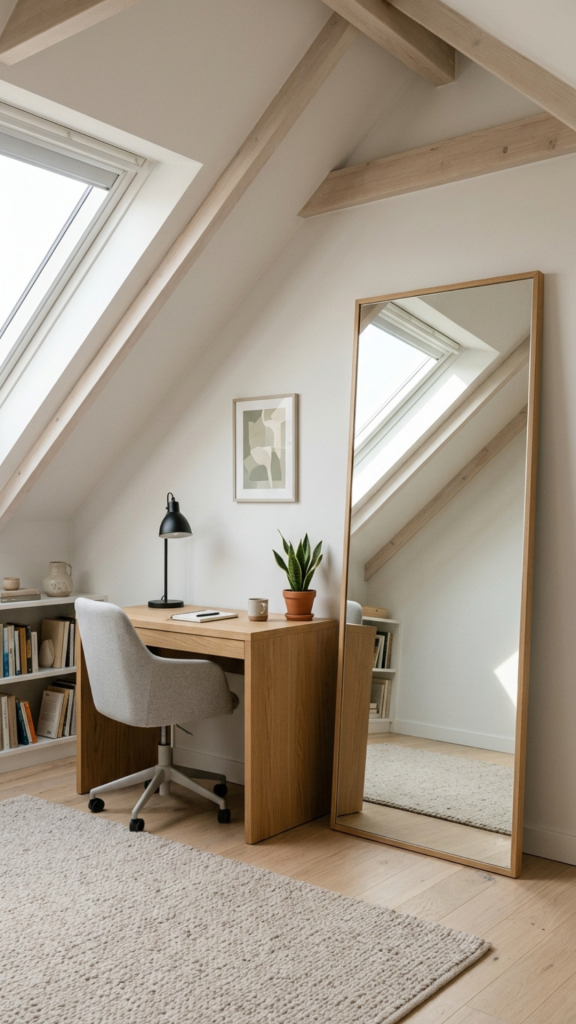
You could also have a reading or relaxation zone with a comfortable chair and a small side table. If space allows, a small area for brainstorming or creative work, perhaps with a whiteboard or a larger table, can be beneficial.
You can define these zones using different elements like rugs, lighting, or even the arrangement of furniture. A small rug under your desk area can visually separate it from the rest of the room. Different types of lighting can also help distinguish zones: brighter task lighting for the work area, and softer ambient lighting for a relaxation nook.
The sloped ceiling can even help naturally define areas; the highest point might be ideal for your main desk, while lower areas could be used for storage or a cozy reading corner.
Zone Definition Techniques
- Area Rugs A well-placed area rug can clearly define the boundaries of your primary workspace, making it feel like a distinct area within the larger room.
- Furniture Arrangement Position furniture to create natural dividers. For example, a bookshelf can act as a subtle partition between a work area and a relaxation zone.
- Lighting Variation Use different types of lighting to differentiate zones. Brighter, more focused lighting for the workspace and softer, ambient lighting for a lounge area.
A freelance artist used this approach effectively in their attic office. They had their main desk setup in the highest part of the room. To the side, under a lower slope, they placed a comfortable armchair and a floor lamp, creating a dedicated space for reading and sketching ideas.
A large area rug anchored the desk zone, visually separating it from the cozy corner.
9. Comfort is Key With Ergonomic Seating
When you’re working long hours, comfort is paramount. Investing in an ergonomic chair is crucial, especially in an attic office where you might be dealing with unusual angles or limited space. Look for a chair that offers good lumbar support, adjustable height, and armrests.
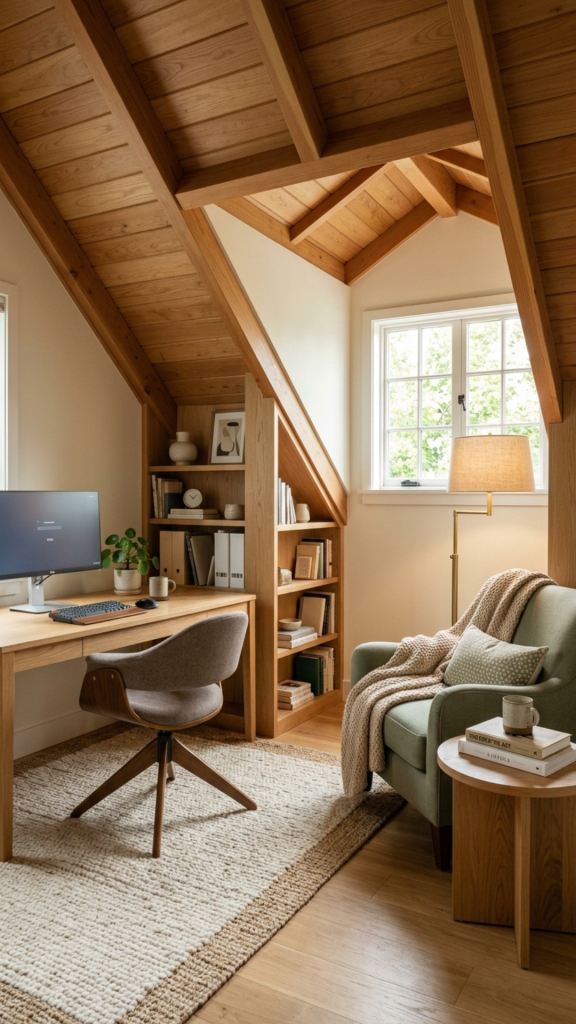
This will help prevent back pain and fatigue, allowing you to stay focused and productive.
Consider the size of the chair in relation to your space. A bulky executive chair might overwhelm a small attic. A more streamlined, ergonomic office chair might be a better fit.
If your desk height is fixed, ensure the chair can be adjusted to a comfortable working level. Even small touches can make a big difference, like a footrest or a lumbar support pillow. Remember, a comfortable body leads to a more focused mind.
Ergonomic Seating Choices
- Adjustable Office Chairs Seek chairs with adjustable height, tilt, and lumbar support. These features allow you to customize the chair to your body and desk setup for optimal comfort.
- Compact Designs Choose chairs that are not overly large or bulky. Many ergonomic chairs come in smaller, space-saving designs that are perfect for attic offices.
- Footrests A footrest can significantly improve posture and comfort, especially if your feet don’t comfortably reach the floor with your current desk and chair setup.
A remote worker found that switching to an ergonomic chair with a mesh back significantly improved their posture and reduced lower back pain. They also appreciated that the chair’s relatively compact design didn’t make their small attic office feel cramped.
10. Personalize Your Space
Your office should be a place that inspires you and makes you feel good. Don’t be afraid to add personal touches. This could include framed photos of loved ones, artwork that you find inspiring, plants that add life and color, or decorative items that reflect your personality.
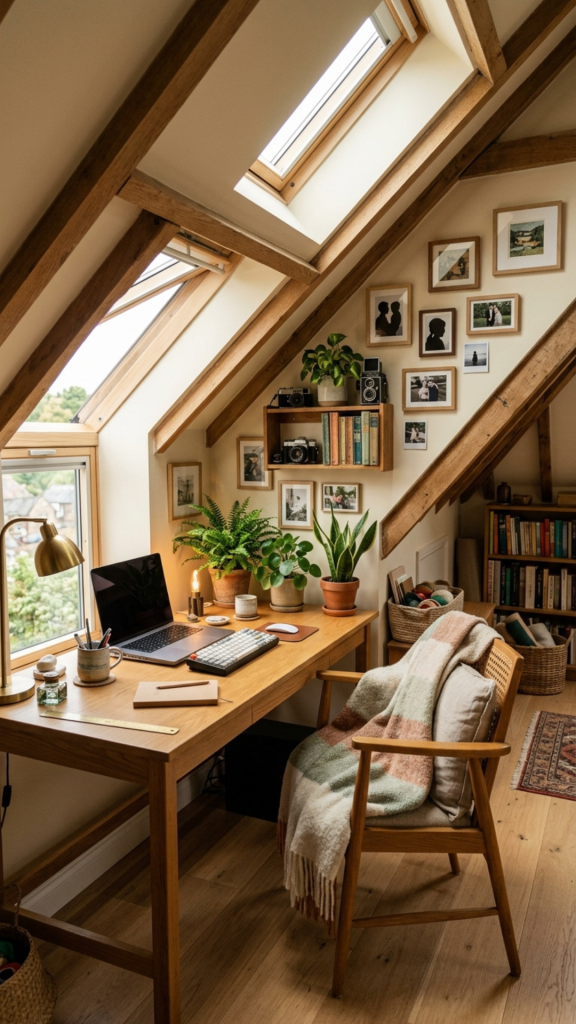
These elements can transform a purely functional space into a place you genuinely enjoy spending time in.
Consider adding textures and colors that make you feel calm and focused. Soft throws, comfortable cushions, or a vibrant rug can add warmth and coziness. Even small details, like a scented candle or an attractive desk organizer, can make a difference.
The goal is to create a workspace that feels like your own sanctuary, a place where you can be both productive and relaxed. The unique architecture of an attic office lends itself well to creating a very personal and intimate atmosphere.
Personalization Ideas
- Plants and Greenery Incorporate indoor plants. They not only add a touch of nature and color but also help to improve air quality and reduce stress.
- Artwork and Photos Display art that inspires you or photos of happy memories. This personalizes the space and can boost your mood and creativity.
- Comfort Items Add soft elements like a throw blanket or decorative pillows to make your seating area more inviting and comfortable.
A writer described how adding a few small potted plants and a collection of vintage cameras to her shelves made her attic office feel much more like “her.” The plants brought life to the space, and the cameras served as conversation starters and personal interests that she enjoyed looking at throughout the day.
11. Use Paint Colors Wisely
The color palette you choose for your attic office can significantly impact its feel and perceived size. Lighter colors generally make a space feel larger and more open, which is often desirable in smaller or sloped-ceiling areas. Whites, off-whites, pale grays, and soft pastels are excellent choices for walls and ceilings.
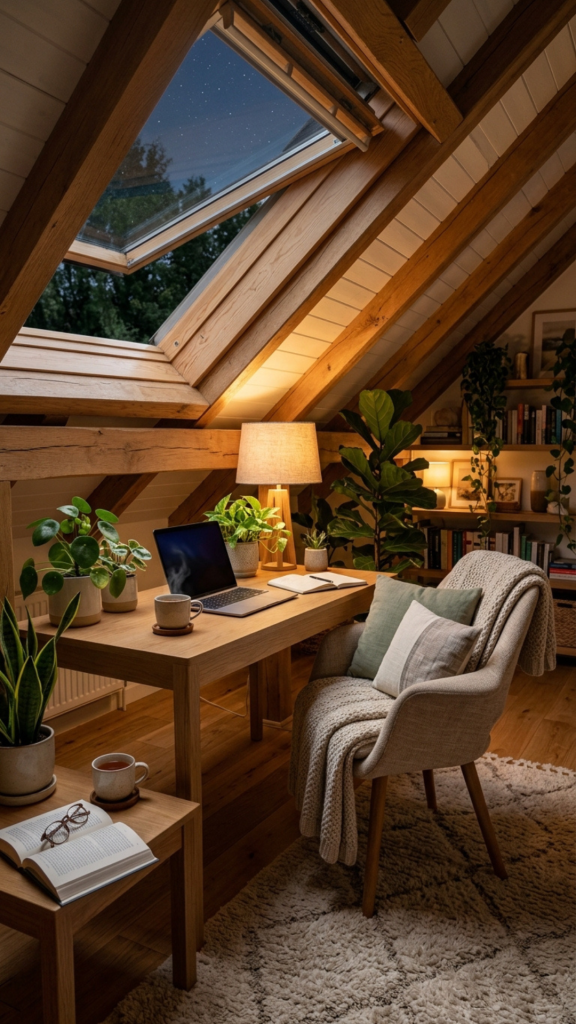
However, don’t be afraid to use accent colors strategically. A bolder color on one wall, perhaps the one behind your desk, can create a focal point and add personality without overwhelming the space. Consider the overall mood you want to create.
Cool colors like blues and greens can promote calmness and focus, while warmer tones like yellows or soft oranges can add energy and warmth. If you have exposed beams, painting them a contrasting color can highlight their architectural features and add depth.
Color Palette Strategies
- Light and Airy Employing light, neutral colors on walls and ceilings can make the attic feel more spacious and brighter by reflecting light.
- Accent Walls A single, bolder color on one wall can add visual interest and depth without making the room feel smaller. It draws attention to that area.
- Warm vs. Cool Tones Choose colors based on the desired atmosphere. Cool tones are often associated with focus and calm, while warm tones can bring energy and cheer.
A home office designer recommended using a soft, muted blue on the walls of a sloped attic office. They then suggested a crisp white for the ceiling to maximize light reflection. For a desk area, they proposed a subtle accent of a pale terracotta to add warmth and a touch of vibrancy, creating a balanced and inviting workspace.
12. Embrace the Cozy Factor
Attics naturally lend themselves to a cozy atmosphere. Embrace this! Use soft textures, warm lighting, and comfortable furnishings to create a space that feels like a retreat.
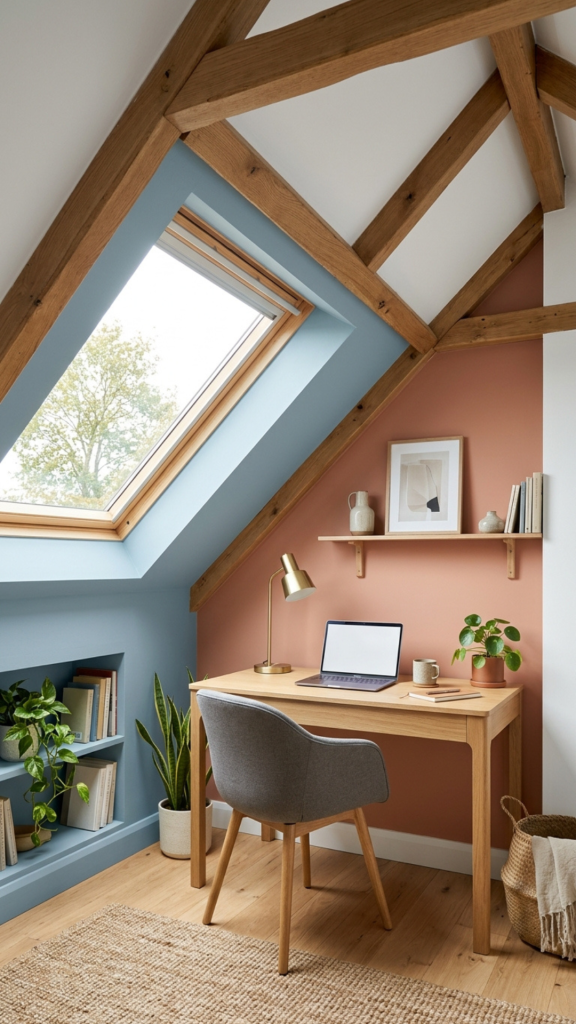
A soft rug underfoot, a plush throw blanket draped over your chair, or some decorative cushions can all contribute to a feeling of warmth and comfort. Consider incorporating natural materials like wood and plants to enhance the cozy ambiance.
The sloped ceilings themselves can contribute to this feeling of coziness by creating a more enclosed and intimate environment. Instead of fighting this, lean into it. Ensure your lighting is warm and inviting, perhaps using dimmer switches to adjust the mood.
A small side table with a cup of tea and a good book can further enhance the feeling of a personal sanctuary. The aim is to create a workspace that feels both productive and deeply comfortable, a place you look forward to working in.
Creating Coziness
- Soft Textures Introduce elements like plush rugs, soft blankets, and comfortable cushions to add warmth and tactile appeal to your office.
- Warm Lighting Opt for warm-toned bulbs and consider dimmer switches to control the ambiance. String lights can also add a magical, cozy touch.
- Natural Materials Incorporate wood accents, plants, and natural fibers to create a grounding and calming atmosphere.
One individual transformed their attic office into a cozy haven by adding sheepskin rugs, a knitted throw, and a salt lamp. They said that even though it was a small space, the textures and warm lighting made it feel incredibly inviting and conducive to creative work.
Frequently Asked Questions
Question: How do I make a sloped ceiling attic office feel bigger
Answer: To make your attic office feel bigger, use light colors on walls and ceilings, strategically place mirrors to reflect light, and opt for furniture with a smaller footprint or that is mounted on the walls. Keeping the space clutter-free is also very important.
Question: What kind of lighting is best for a sloped attic office
Answer: A mix of lighting is best. Use ambient lighting for overall brightness, task lighting for your desk area, and accent lighting for mood. Skylights or sun tunnels are excellent for natural light.
Recessed lighting and adjustable lamps are good artificial options.
Question: Can I put a desk directly under a sloped ceiling
Answer: Yes, you can, but you need to be mindful of the headroom. Consider a desk that is lower in height or one that is built to fit the specific angle of the ceiling. This ensures comfortable use and avoids feeling too cramped.
Question: How much storage can I realistically have in an attic office
Answer: You can have a surprising amount of storage by thinking vertically and utilizing every inch. Wall-mounted shelves, under-eave storage units, and built-in furniture are great solutions. Even shallow drawers can make a difference.
Question: Is it hard to make an attic office cozy
Answer: Not at all. Attics naturally have a cozy feel due to their enclosed nature. Embrace this by using soft textures, warm lighting, and personal decorative items to enhance the comfortable ambiance.
Conclusion
Transforming an attic with a sloped ceiling into a functional office is achievable. By embracing the angles, smart lighting, and creative storage, you can craft a cozy and productive workspace. Focus on personal touches and comfortable furniture to make it your own inviting retreat.
Great information shared.. really enjoyed reading this post thank you author for sharing this post .. appreciated
Great information shared.. really enjoyed reading this post thank you author for sharing this post .. appreciated
Nice post. I learn something totally new and challenging on websites
Sitenizin tasarımı da içerikleriniz de harika, özellikle içerikleri adım adım görsellerle desteklemeniz çok başarılı emeğinize sağlık.
There is definately a lot to find out about this subject. I like all the points you made
Bilgiler için teşekkür ederim işime son derece yaradı