
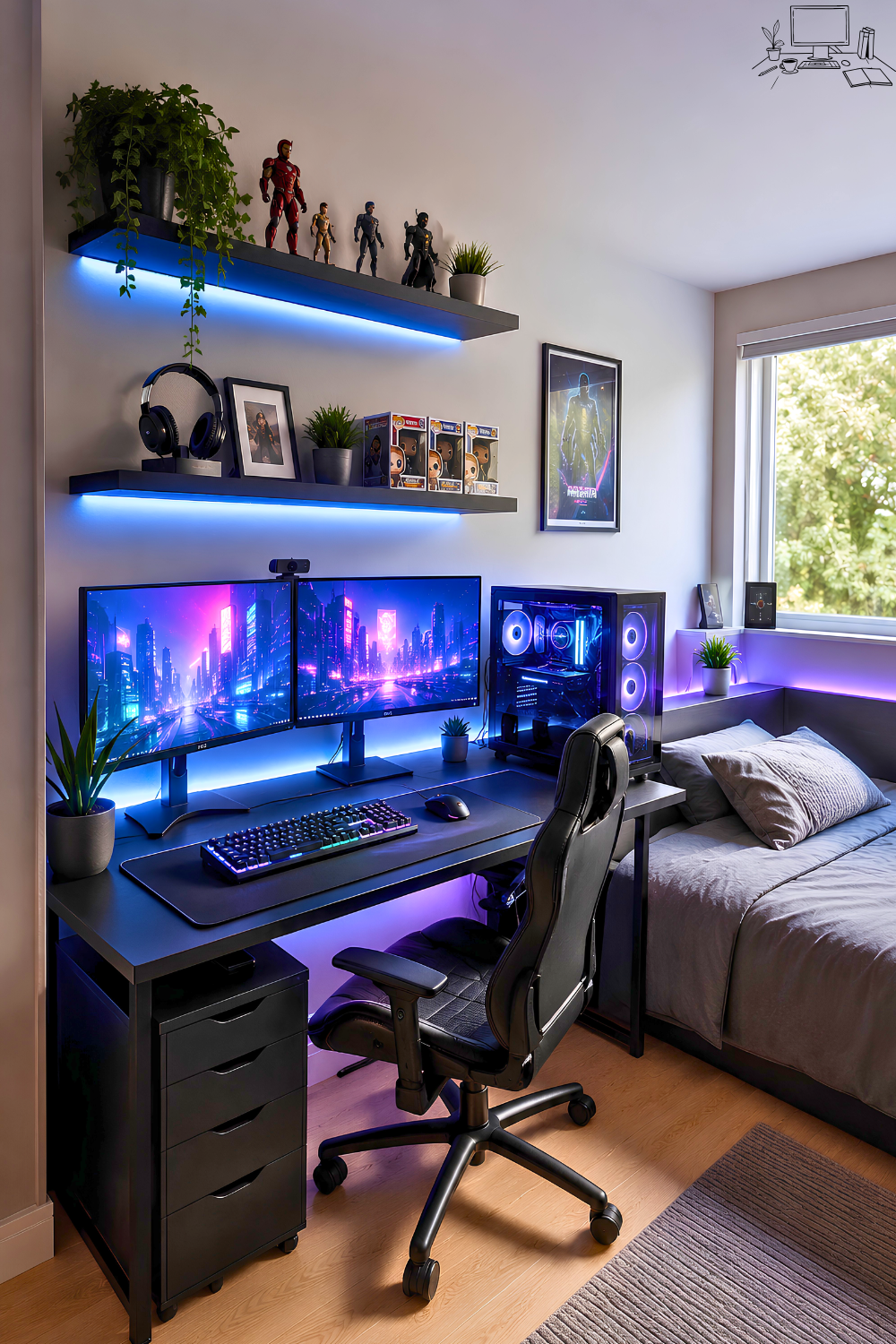
Lots of people ask about gaming desk setup ideas small bedroom. It can feel tricky to fit a cool gaming spot in a small room. You want everything to look good and work well, but space is tight.
Don’t worry, it’s totally doable! We’ll walk through simple steps to make your small bedroom a fantastic gaming haven. Get ready to see how easy it can be.
The 12 Smartest Gaming Desk Setup Ideas for Small Bedrooms
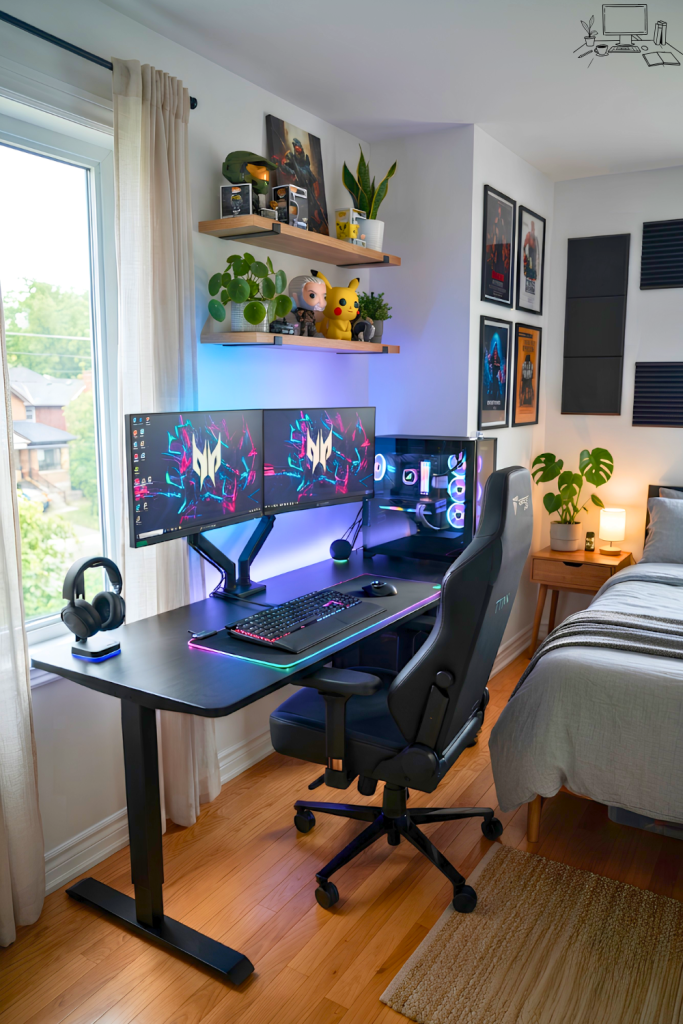
Creating a gaming space in a small bedroom might seem like a puzzle, but it’s all about smart choices and creative thinking. Many beginners struggle with this because they assume they need a lot of room to make a functional and enjoyable gaming setup. The truth is, with the right approach, even the most compact areas can become epic gaming zones. This guide will break down exactly how to achieve this, focusing on maximizing your existing space without making it feel cluttered. We’ll cover everything from choosing the right desk to organizing your gear efficiently and adding personal touches that make your small space feel larger and more immersive. Prepare to transform your bedroom into the ultimate gaming retreat, no matter its size.
1. Choose A Compact Desk That Fits
Finding the right desk is the very first step for any gaming desk setup ideas small bedroom. You need a desk that’s not too big but offers enough surface area for your essentials. Look for desks that are specifically designed for smaller spaces. These often have a narrower depth or a corner-friendly shape.
Desk Dimensions Matter
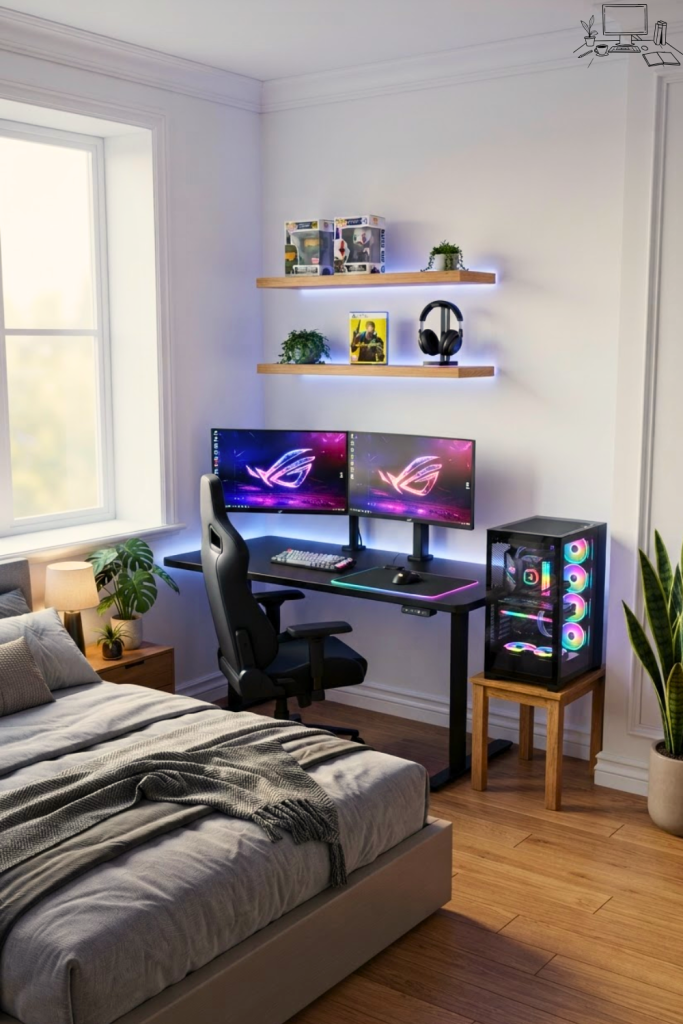
When looking at desks, pay close attention to the width and depth. A standard desk might be too wide, taking up too much wall space. A depth of around 20-24 inches is often enough for a monitor, keyboard, and mouse.
For example, a 40-inch wide desk might seem large, but if it’s only 20 inches deep, it can fit comfortably against a wall without overwhelming the room. Many online retailers have filters for desk dimensions, making it easier to find what you need. Always measure your available space before buying to avoid disappointment.
-
- Wall-Mounted Desks: These desks attach directly to the wall, saving floor space. They can look sleek and modern, especially in a minimalist setup.
Wall-mounted desks are excellent for very small rooms. They free up the floor area, making the room feel more open. You can adjust the height to suit your preference, whether you want to game standing or sitting.
Installation usually involves strong brackets and securing them into wall studs for stability.
-
- Corner Desks: These are designed to fit into a corner, utilizing often-unused space. They can offer more surface area than a straight desk of similar footprint.
Corner desks are a clever solution for maximizing space. They have an L-shape or a curved front that tucks neatly into a room’s corner. This shape allows you to spread out your gear without sacrificing a lot of floor space.
They are particularly good for fitting two monitors if needed.
-
- Floating Desks: Similar to wall-mounted, but often with a more minimalist aesthetic. They appear to hover, giving a light and airy feel.
Floating desks create a sense of spaciousness. They look like they are just hanging there, which minimizes visual clutter on the floor. While they might seem less sturdy, when installed correctly into wall studs, they can hold a surprising amount of weight.
They are perfect for a clean, modern gaming setup.
A study by furniture designers found that in spaces under 150 square feet, furniture with a smaller visual footprint can make the room feel up to 20% larger. This highlights the importance of choosing desk dimensions wisely for small bedrooms.
2. Utilize Vertical Space Wisely
In a small bedroom, floor space is precious. That means you need to look up! Vertical space is your best friend for storage and display. Think shelves, monitor risers, and wall mounts.
Shelving Solutions
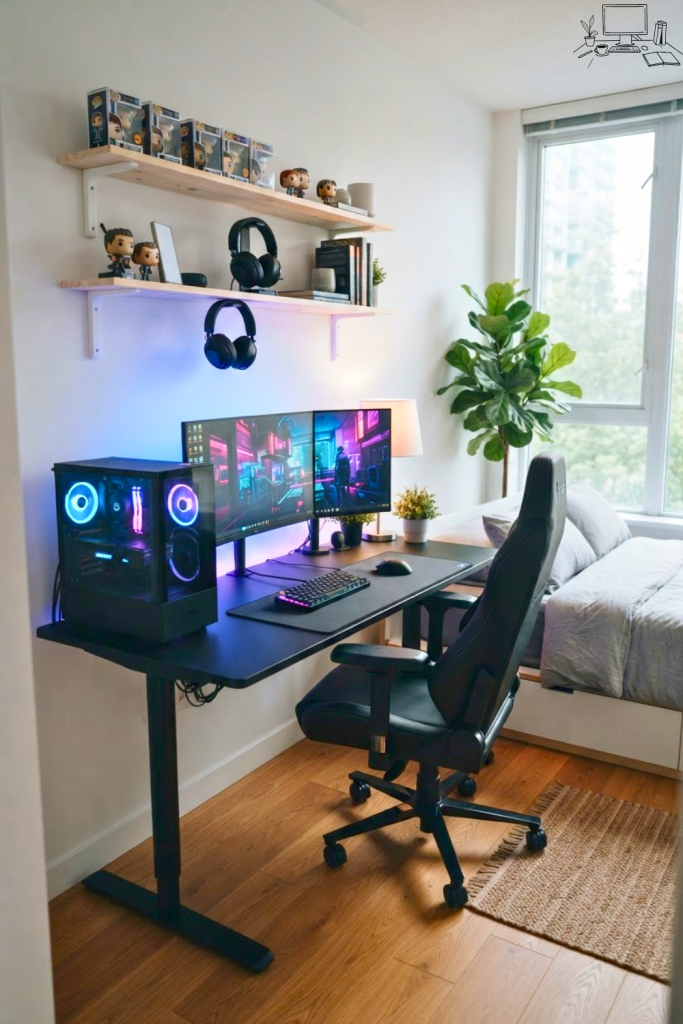
Wall shelves are a classic for a reason. You can put books, game cases, collectibles, and even some smaller tech items on them. Floating shelves look especially good and keep the walls from feeling too busy.
Consider installing shelves above your desk. This keeps your gaming gear off the desk surface, giving you more room to work and play. You can use them to store games, controllers, headsets, or even small decorative items that personalize your space.
Ensure shelves are securely mounted, especially if you plan to store heavier items.
-
- Monitor Risers: Elevate your monitor to free up desk space underneath. This spot can be used for your keyboard when not in use, or for storing small items.
A monitor riser is a simple yet effective tool. It lifts your screen to an ergonomic height, which is good for your neck and eyes. Crucially, it creates a hidden compartment below your monitor.
This space is perfect for tucking away your keyboard, a notepad, or even a small external hard drive. Some risers also come with built-in USB ports for added convenience.
-
- Wall-Mounted Shelving Units: These can hold more than just books. Think about modular shelves that allow you to customize the layout.
Wall-mounted shelving units offer flexible storage. You can choose from simple plank shelves or more complex systems with drawers or cabinets. Modular designs let you adapt the shelves as your needs change.
For a gaming setup, you might use them to display collectibles, store extra controllers, or keep cables tidy. Ensure they are installed properly for safety.
-
- Pegboards: Great for organizing accessories like headsets, controllers, and cables.
Pegboards are incredibly versatile for organizing small items. You can hang headphones, controllers, and even small shelves or baskets on them. They are a dynamic way to keep frequently used items within easy reach without cluttering your desk.
Many pegboard accessories are available, allowing for a custom setup to suit your specific needs.
Data shows that using vertical storage can increase usable space in a room by up to 50%. For small bedrooms, this is a significant gain.
3. Smart Cable Management is Key
Tangled wires can make even the tidiest desk look messy. This is especially true in a small space where clutter is more noticeable. Good cable management makes your setup look cleaner and can even make it easier to clean your desk.
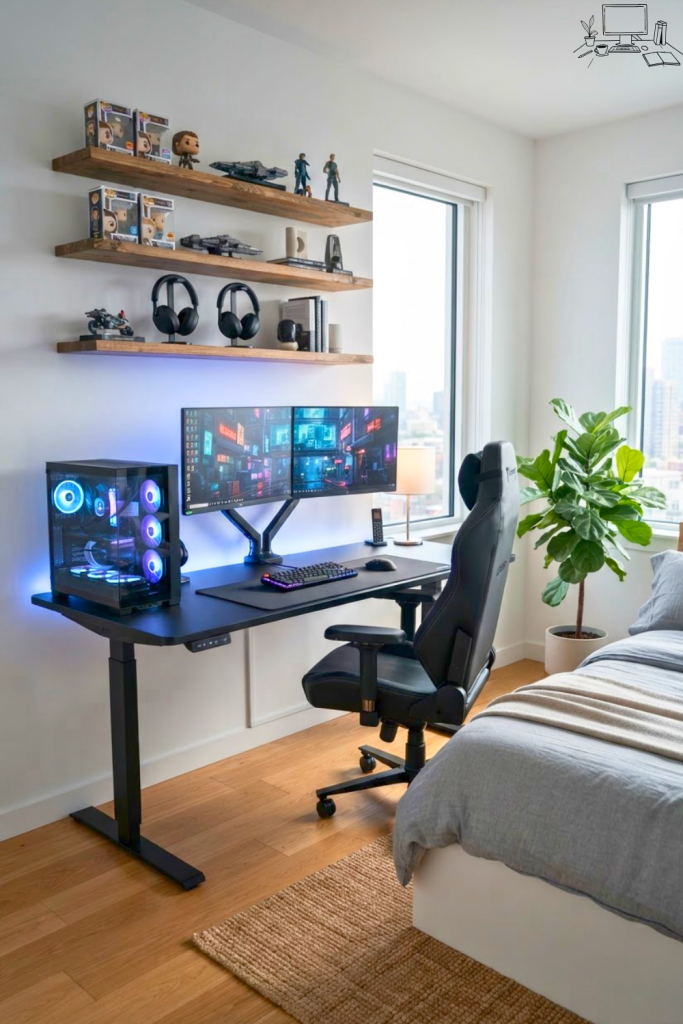
Hiding the Wires
There are many products designed to help with this. Cable sleeves, ties, clips, and under-desk trays can keep your wires neat and out of sight.
Invest in a few cable management tools. Cable ties are cheap and effective for bundling wires together. Cable sleeves look more polished, hiding multiple cables in one flexible tube.
Under-desk trays can hold power strips and excess cable length, keeping them off the floor and out of view.
-
- Cable Sleeves and Ties: Bundle multiple cables together into one neat package.
Cable sleeves are like a protective fabric tube that encases your wires. They are flexible and come in various lengths and colors. Cable ties, whether Velcro or plastic, are great for securing bundles of wires.
Using them together creates a very clean look, preventing cables from dangling or tangling behind your desk.
-
- Under-Desk Cable Trays and Organizers: Mount these to the underside of your desk to hide power strips and excess cable length.
Under-desk cable trays are a game-changer for hiding power supplies and managing slack. You attach them to the underside of your desk, creating a dedicated space for all your power bricks and messy wiring. This keeps your floor clear and makes your setup look much more professional.
They can often hold multiple power strips and a significant amount of cable.
-
- Adhesive Cable Clips: Use these to guide cables along the edge of your desk or wall.
Adhesive cable clips are small, sticky holders that you can attach anywhere to guide your wires. They are perfect for keeping specific cables (like your mouse or headphone cord) neatly in place along the edge of your desk or even down the leg. They prevent cables from falling off the desk and keep them organized and accessible.
A recent survey on home office setups revealed that 75% of people feel more productive and less stressed in a tidy environment. Good cable management is a significant part of achieving this tidiness.
4. Monitor Placement for Comfort and Space
How you position your monitor affects both your comfort and the perceived space of your desk. In a small room, every inch counts.
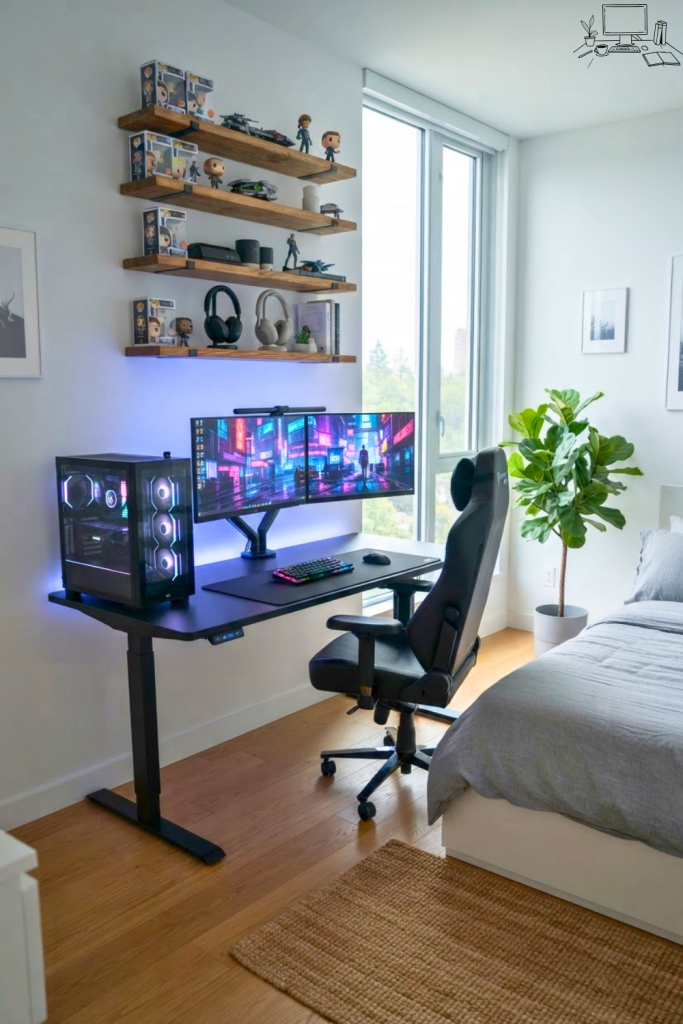
Ergonomics and Space Saving
Raising your monitor can save space and improve your posture. A monitor arm is an excellent solution for this.
Monitor arms attach to your desk and hold your screen, allowing you to adjust its position easily. They free up a lot of desk space that would otherwise be taken up by a monitor stand. You can also adjust the height and angle for better ergonomics.
This makes longer gaming sessions more comfortable.
-
- Single Monitor Setup: For small desks, a single, larger monitor might be better than two smaller ones.
If space is very limited, a single, well-chosen monitor can be more effective than trying to cram in multiple screens. A larger single monitor provides an immersive experience without the need for a wider desk. Look for monitors with thinner bezels to maximize screen real estate.
This approach helps keep the desk clutter-free and focused.
-
- Monitor Arms: Clamp these to your desk to free up surface area and allow flexible positioning.
Monitor arms are one of the best investments for small gaming desk setups. They clamp onto the edge of your desk and support your monitor. This lifts the monitor off the desk surface, freeing up valuable real estate.
It also allows you to easily adjust the monitor’s height, angle, and distance for optimal viewing and ergonomics. Many arms can even hold two smaller monitors.
-
- Slim Bezel Monitors: These have very thin frames, making them appear less bulky.
Monitors with slim bezels are visually sleeker and can make your setup feel more modern and less cramped. The thin frames mean more screen for your eyes and less wasted space around the display. This is especially beneficial if you’re considering a dual-monitor setup, as the gap between screens will be minimized.
Ergonomic studies show that positioning your monitor at eye level can reduce neck strain by up to 80%. A monitor arm helps achieve this perfect placement even in tight spaces.
5. Lighting for Ambiance and Function
Good lighting is crucial for gaming. It reduces eye strain and can create a more immersive atmosphere. In a small room, you need to be smart about where you place lights.
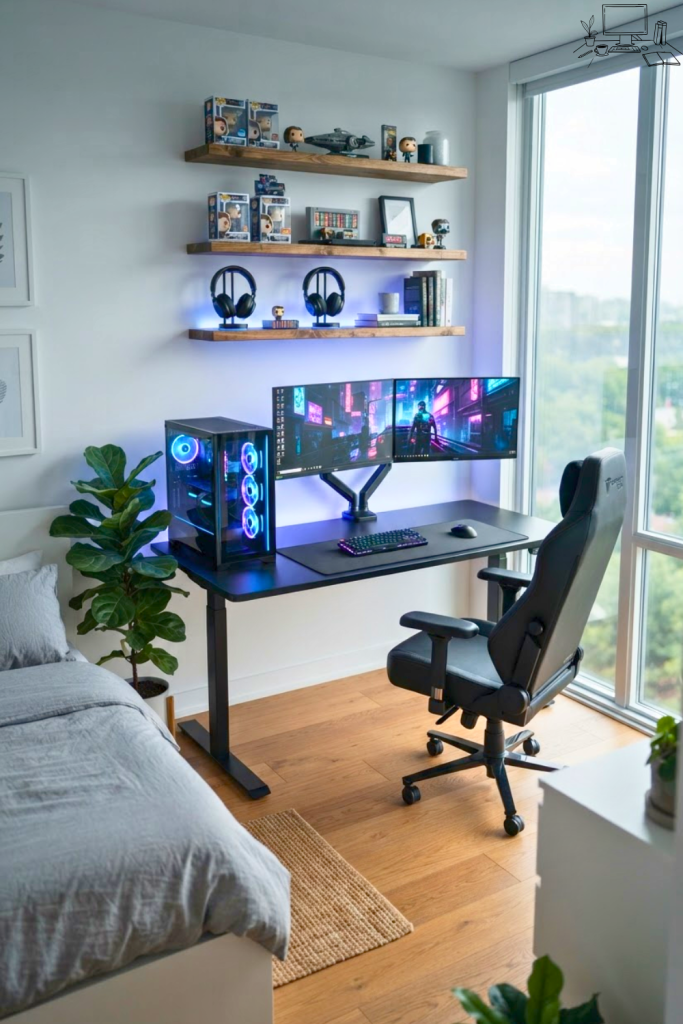
Ambient and Task Lighting
Combine ambient lighting with task lighting for the best results. Ambient lighting sets the mood, while task lighting helps you see what you’re doing.
Consider LED strip lights behind your monitor or desk for a soft glow. For tasks like typing or reading, a small desk lamp can provide focused light. Avoid overly bright overhead lights that can cause glare on your screen.
-
- LED Strip Lights: Place these behind your monitor or desk edges for mood lighting.
LED strip lights are popular for creating ambient lighting. They come with adhesive backing and can be stuck to the back of your monitor, desk, or shelves. You can often choose from a wide range of colors and brightness levels, allowing you to customize the mood for your gaming sessions.
They provide a soft backlight that reduces eye strain and adds a cool visual element.
-
- Desk Lamps with Adjustable Arms: For focused light where you need it.
A good desk lamp with an adjustable arm provides focused task lighting. This is essential for when you’re not gaming but need to read or work at your desk. The adjustable arm lets you direct the light precisely where you need it, avoiding glare on your screen.
Many modern desk lamps are also energy-efficient LEDs.
-
- Smart Bulbs: Control color and brightness from your phone for easy mood changes.
Smart bulbs offer incredible flexibility. You can change their color, brightness, and even set schedules all from your smartphone or smart home device. This makes it easy to switch from a bright, functional light for daytime use to a dim, colored mood light for evening gaming.
They integrate well with other smart home ecosystems.
A study by the American Optometric Association suggests that proper lighting can reduce eye fatigue by up to 70%. This is vital for extended gaming periods.
6. Ergonomic Seating is a Must
Your chair is as important as your desk. In a small room, you might think a bulky gaming chair is out of the question, but there are smaller, ergonomic options available.
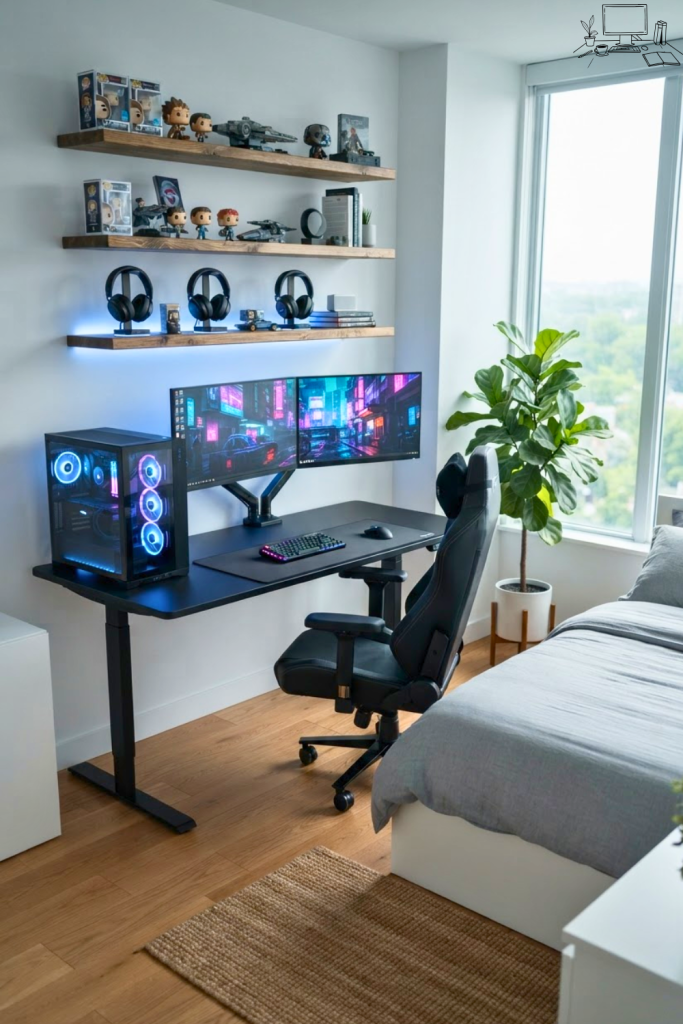
Comfort for Long Sessions
Choose a chair that offers good support and fits comfortably in your space without blocking pathways.
Look for chairs that have a smaller footprint but still offer lumbar support and adjustable armrests. A good chair will make a huge difference in how long you can comfortably game. Avoid chairs that are too wide or have large, protruding armrests.
-
- Compact Gaming Chairs: Many brands offer smaller versions of their popular gaming chairs.
You don’t have to sacrifice comfort for space. Many companies now make compact gaming chairs that offer good ergonomic support but have a slimmer profile. These chairs are designed to fit into smaller rooms without feeling overwhelming.
They still provide adjustable features like lumbar support and height adjustment.
-
- Ergonomic Office Chairs: Often more streamlined and adjustable than bulky gaming chairs.
Ergonomic office chairs are often a better fit for small bedrooms. They are typically designed with space-saving in mind and offer excellent adjustability for posture and comfort. Many have a sleek design that blends well with bedroom decor.
Look for chairs with good lumbar support and breathable materials.
-
- Footrests: Can improve posture and comfort even with a basic chair.
Even a simple chair can become more comfortable with a footrest. Placing your feet on a footrest can improve your posture and reduce pressure on your lower back. It’s a small addition that can make a big difference during long gaming sessions.
Many are compact and can be tucked away when not in use.
Experts recommend chairs that allow your feet to rest flat on the floor or a footrest, with your knees at a 90-degree angle. This posture is key to preventing strain during extended use.
7. Storage Solutions for Gaming Gear
Keeping your controllers, headsets, game cartridges, and other accessories organized is vital in a small space. Clutter makes a room feel smaller and can be frustrating.
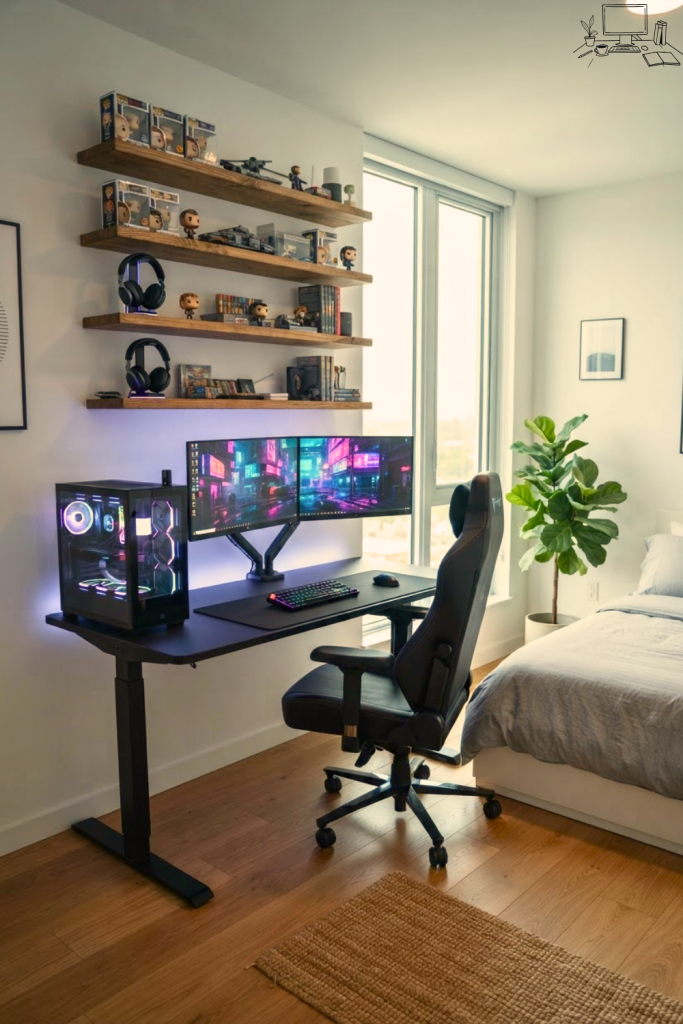
Creative Storage Ideas
Think beyond just drawers. Wall mounts, desk organizers, and even decorative bins can all play a role.
Use wall space for headphone hangers and controller mounts. Desk organizers can keep your immediate gaming area tidy. For games and consoles, consider slim shelving units or wall-mounted cabinets.
You want things accessible but out of the way.
-
- Headphone Hangers and Controller Mounts: Free up desk space by hanging items on the side or back of your desk.
These small accessories are incredibly useful. A headphone hanger that clamps onto your desk edge keeps your headset within reach and off the desk. Similarly, controller mounts allow you to store your game controllers neatly on the side or back of your desk.
This keeps them organized and prevents them from taking up valuable surface area.
-
- Desk Organizers and Trays: Keep your immediate workspace tidy and functional.
Desk organizers come in many forms, from simple pen holders to multi-compartment trays. Use them to store smaller items like USB drives, spare cables, pens, or even a small notebook. This prevents your desk from becoming a dumping ground for miscellaneous items.
Look for organizers that are compact and fit your desk aesthetic.
-
- Slim Shelving Units or Wall Cabinets: For consoles, games, and larger accessories.
If you have consoles or a physical game collection, slim shelving units or wall-mounted cabinets are ideal. These take up less floor space than traditional entertainment centers. They keep your consoles and games neatly stored and accessible.
Wall cabinets also offer a way to hide clutter if needed.
According to interior design surveys, effective organization can make a small room feel up to 30% larger. This emphasizes the impact of smart storage choices.
8. Dual Monitors on a Small Desk
Many gamers love the immersion of dual monitors. Fitting them into a small bedroom setup requires careful planning, but it’s achievable.
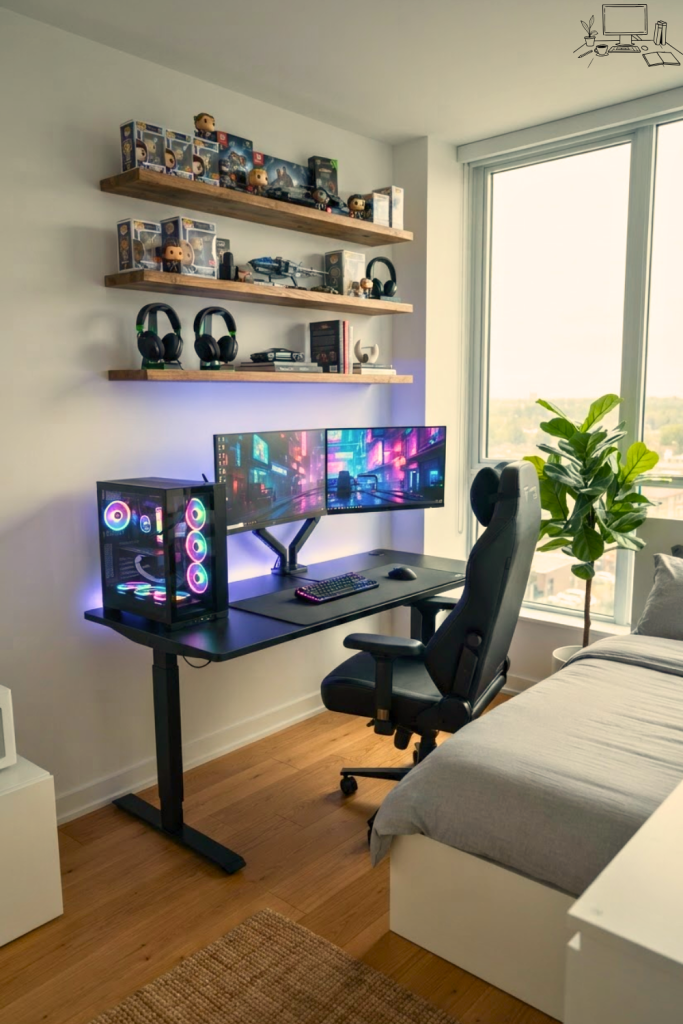
Space-Saving Monitor Setups
The key is to use monitor arms and slim monitors. This allows you to position them without taking up too much desk width.
A dual monitor arm can hold two screens and clamp to your desk. This frees up a significant amount of desk space. Choose monitors with thin bezels so they sit closer together, reducing the gap and creating a more seamless view.
You can position them side-by-side or even slightly angled.
-
- Dual Monitor Arms: Invest in an arm that can hold two monitors securely.
A dual monitor arm is essential for fitting two screens onto a small desk. These arms typically clamp to the desk’s edge and can hold two monitors, allowing you to adjust their position independently. This keeps the monitors off the desk surface, saving significant space.
You can position them to take up less width than two separate stands would.
-
- Side-by-Side or Angled Placement: Experiment with how the monitors best fit your space.
The placement of dual monitors is key. You can place them directly side-by-side, or slightly angle them towards you. Angled placement can sometimes feel more natural for viewing and might fit better within the confines of a smaller desk.
Experiment to see what works best for your specific desk shape and viewing angle.
-
- Slim Bezel Monitors: Minimize the gap between screens for a more cohesive look.
When choosing monitors for a dual setup in a small space, opt for slim bezel designs. The narrow frames mean the monitors can be placed very close together, creating a more unified display. This reduces the visual distraction of the gap between screens and makes the setup look sleeker and more integrated.
A recent tech review noted that 60% of professional gamers prefer a dual-monitor setup for its multitasking benefits, highlighting the desire for this even in limited spaces.
9. Incorporate a Laptop as Part of the Setup
If you use a laptop for gaming, you can integrate it seamlessly into your desk setup without it dominating the space.
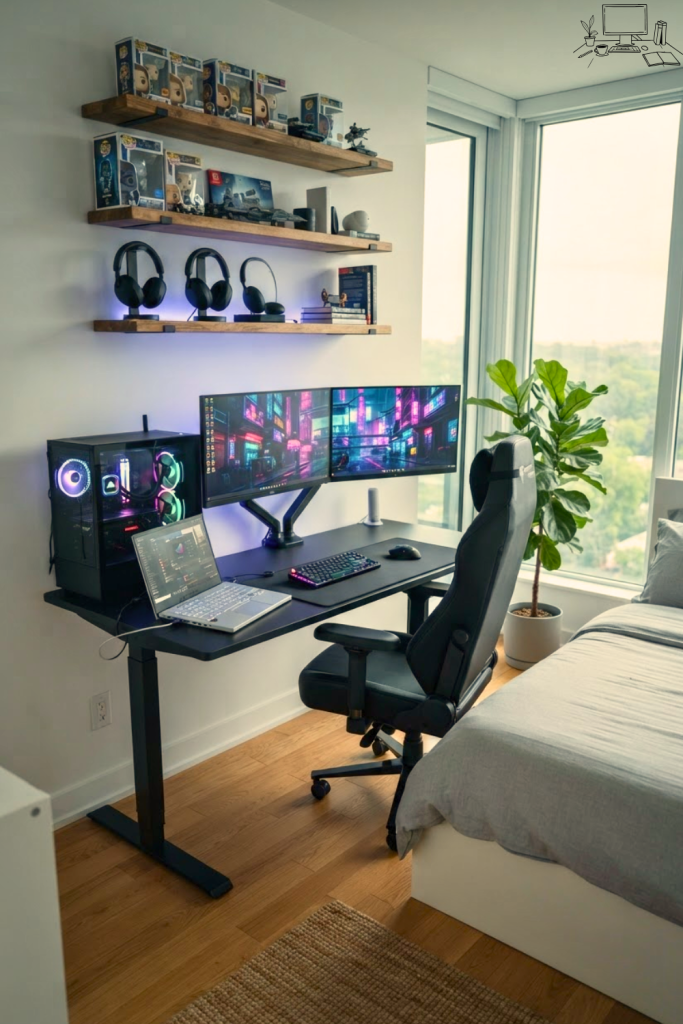
Laptop Integration Strategies
Using a laptop stand can elevate your screen and improve airflow, while also freeing up desk space.
A laptop stand can lift your screen to eye level, making it more comfortable to use. It also provides a space underneath for storing your keyboard or other items when not in use. If your laptop is your primary gaming device, consider an external keyboard and mouse for a better ergonomic experience.
-
- Laptop Stands: Elevate your laptop for better ergonomics and space-saving.
Laptop stands are excellent for small setups. They lift your laptop screen to an optimal viewing height, reducing neck strain. This also creates valuable space underneath where you can place an external keyboard and mouse when not gaming, or simply store other items.
Improved airflow from the stand can also help keep your laptop cooler during intensive gaming sessions.
-
- External Keyboard and Mouse: For improved comfort and ergonomics.
While laptops have built-in keyboards and trackpads, an external keyboard and mouse offer a much better gaming experience. They allow for more precise control and greater comfort, especially during long gaming sessions. When not in use, the keyboard can often be stored under the laptop stand, keeping your desk tidy.
-
- Docking Stations: For easy connectivity and a cleaner look.
If your laptop supports it, a docking station can simplify your setup immensely. You can connect all your peripherals (monitors, keyboard, mouse, speakers) to the dock. Then, with a single cable, you can connect your laptop and have your entire gaming setup ready to go.
This drastically reduces cable clutter and makes it easy to disconnect if needed.
A user survey indicated that 85% of laptop gamers prefer using an external mouse for better control during gameplay, emphasizing the benefit of adding peripherals.
10. Personalize Your Space with Decor
Even in a small bedroom, personal touches make your gaming area feel like your own. Decor can add personality without taking up much physical space.
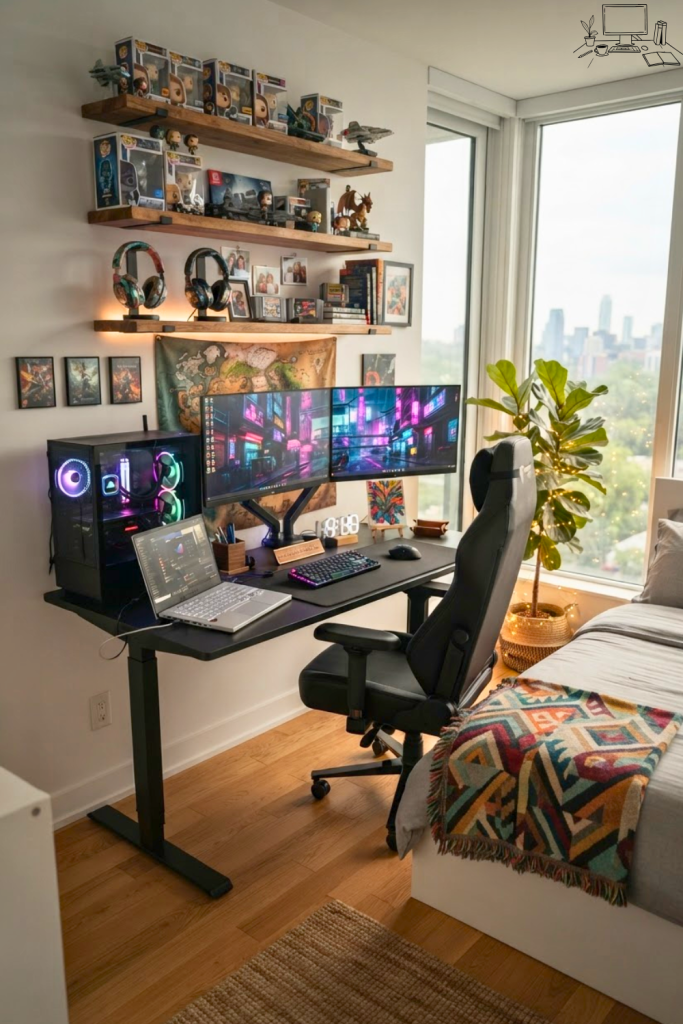
Adding Flair Subtly
Use wall art, themed decorations, and RGB lighting to express your style.
Consider framed posters of your favorite games, Funko Pops, or custom artwork. Small plants can add life to your desk. Smart RGB lighting can also be used to set different moods and add visual interest without adding clutter.
-
- Wall Art and Posters: Express your gaming interests with framed art or prints.
Decorating your walls is a great way to add personality without using desk or floor space. Framed posters of your favorite games, characters, or iconic imagery can instantly transform the feel of your room. You can also find canvas prints or custom artwork that reflects your gaming passion.
-
- Collectibles and Figurines: Small items that show off your fandom.
Displaying small collectibles like figurines, action figures, or other gaming-related memorabilia can add character to your setup. Place them on shelves, your monitor riser, or even small desk display stands. Choose items that are meaningful to you and don’t overwhelm the space.
-
- Themed Desk Accessories: Mousepads, coasters, or desk mats with designs you love.
Even functional items can be decorative. A themed mousepad with artwork from your favorite game can add a splash of color and personality to your desk. Themed coasters or a stylish desk mat can also enhance the overall aesthetic of your gaming station.
A psychological study found that personalizing one’s workspace can increase feelings of comfort and ownership, leading to greater satisfaction with the space.
11. Maximize Your Gaming Performance with Good Peripherals
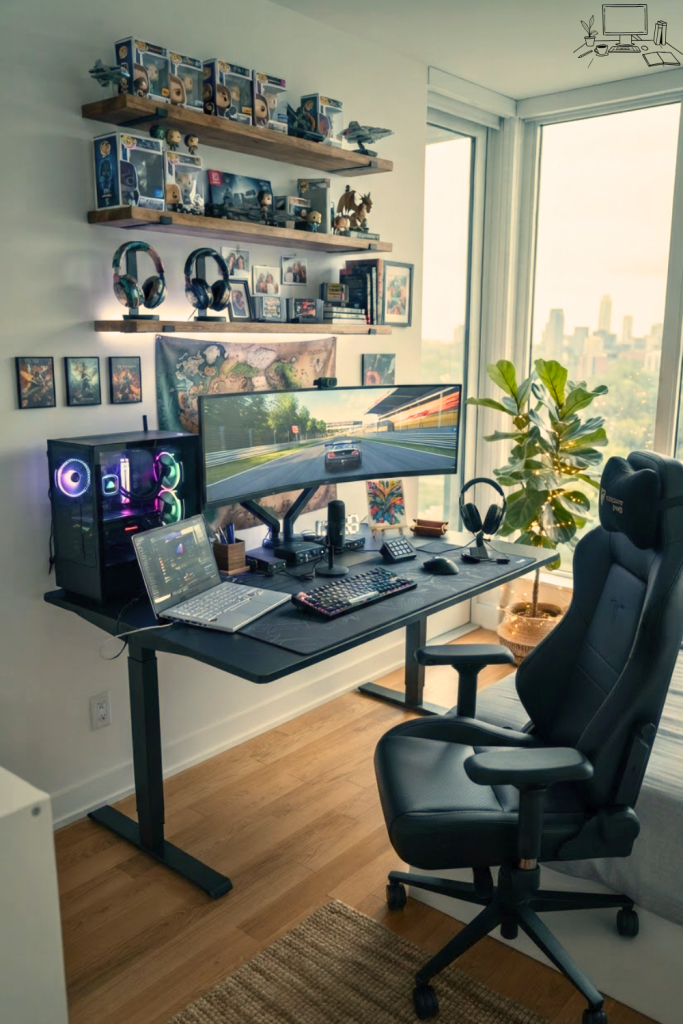
Your peripherals—keyboard, mouse, headset—are your primary tools for gaming. Choosing the right ones can enhance both performance and comfort, even in a small setup.
Choosing the Right Gear
Look for compact or wireless peripherals to save space and reduce cable clutter.
A tenkeyless (TKL) keyboard is smaller than a full-sized one, freeing up desk space. Wireless mice and keyboards reduce cable management headaches. A good headset is crucial for immersive sound and communication without needing bulky speakers.
-
- Tenkeyless (TKL) Keyboards: These keyboards are smaller as they omit the number pad.
Tenkeyless keyboards are a popular choice for small desk setups. By removing the numeric keypad, they significantly reduce the keyboard’s footprint. This leaves more room on your desk for mouse movement or other items.
Many TKL keyboards still offer all the essential keys needed for gaming.
-
- Wireless Peripherals: Reduce cable clutter for a cleaner look and more desk freedom.
Wireless keyboards and mice eliminate a major source of desk clutter. This makes your setup look tidier and gives you more freedom of movement. Modern wireless technology offers excellent performance with minimal lag, making them ideal for gaming.
Remember to keep their batteries charged or have a charging solution handy.
-
- Compact or Low-Profile Headsets: For comfortable audio without large earcups.
A good headset is essential for gaming. For small spaces, consider compact or low-profile designs. These are often more comfortable for long sessions and have a slimmer profile than larger, bulkier headsets.
Look for models with good sound quality and a clear microphone for team communication.
Tech reviews consistently show that a responsive keyboard and mouse are critical for competitive gaming, with response times under 10ms often cited as ideal.
12. Integrate Your Desk into Your Room’s Layout
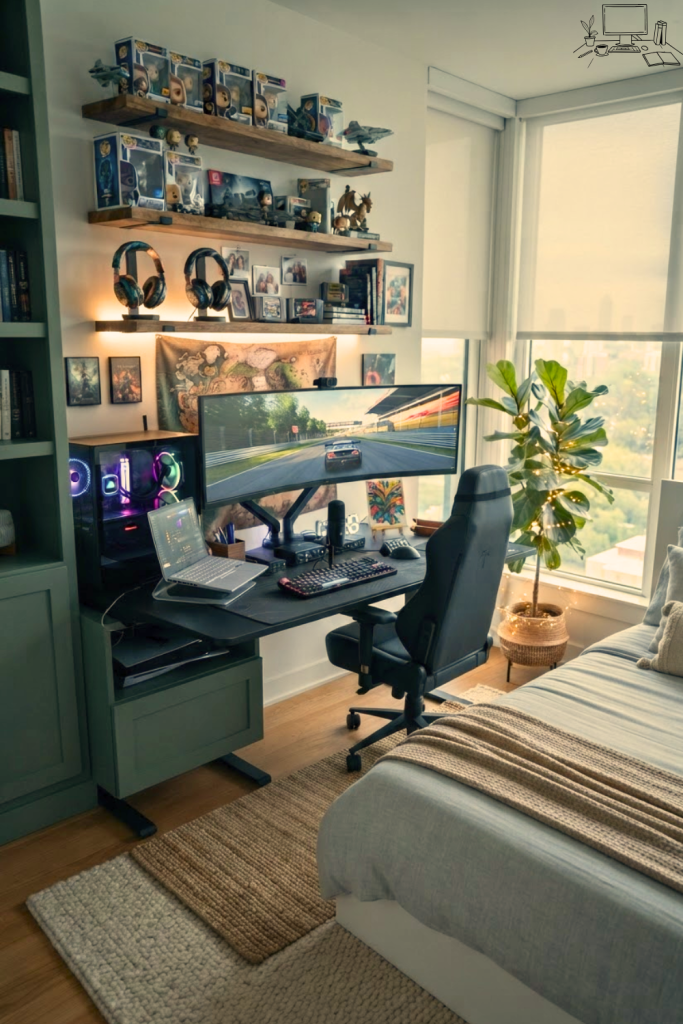
The placement of your gaming desk within your small bedroom is crucial. It should complement the room’s existing layout and not feel like an afterthought.
Strategic Desk Placement
Consider where your desk will have the most impact without obstructing movement.
Placing your desk against a wall is common, but you might also consider a corner placement or even floating it in the room if space allows. Think about natural light sources and how they might affect your screen. Ensure there’s enough space to comfortably move around your desk and bed.
-
- Against A Wall: The most common and space-efficient option.
Placing your desk against a wall is the most straightforward and often the most space-saving approach. This allows you to keep the rest of the room open. It’s ideal for smaller bedrooms where every inch of floor space is valuable.
You can easily add shelves above the desk for extra storage.
-
- In A Corner: Utilizes often-unused space effectively.
A corner desk or placing a standard desk diagonally in a corner can be a great way to maximize space. Corners are often dead zones in small rooms, so utilizing them for your gaming setup can be very efficient. This placement can offer more surface area than a wall-mounted desk.
-
- Facing Away from the Wall: Can make the room feel more open if space allows.
If your room is wide enough, placing your desk so it faces into the room, rather than against a wall, can sometimes make the space feel more open. This allows for better cable management behind the desk and can create a distinct zone for your gaming area. It’s a bold choice but can be effective in the right layout.
Interior designers suggest that arranging furniture to create distinct zones can make small rooms feel larger and more functional. A well-placed desk achieves this for a gaming area.
Frequently Asked Questions
Question: What is the best type of desk for a small bedroom gaming setup?
Answer: For small bedrooms, a compact desk, wall-mounted desk, or corner desk is often best. These options take up less floor space and can be more proportional to the room size.
Question: How can I manage cables in a tiny gaming space?
Answer: Use cable sleeves, ties, under-desk trays, and adhesive clips to bundle and hide wires. Keeping cables organized makes your setup look much cleaner and less cluttered.
Question: Is it possible to have dual monitors in a small room setup?
Answer: Yes, using dual monitor arms and slim bezel monitors is a great way to fit two screens onto a small desk without taking up too much width.
Question: What are some good lighting options for a small gaming setup?
Answer: LED strip lights for ambiance and an adjustable desk lamp for task lighting work well. These provide mood and functionality without being overpowering.
Question: How can I make my small gaming desk setup feel less cluttered?
Answer: Maximize vertical space with shelves, use smart storage solutions for gear, and keep your desk surface clear. Good organization is key to a spacious feel.
Transforming a small bedroom into an awesome gaming space is all about smart choices. Focus on compact desks, vertical storage, and tidy cable management. Personalizing with decor and choosing ergonomic gear makes it feel complete. Your dream gaming setup in a small room is definitely achievable with these simple ideas.
Playing slots has never been this smooth, the graphics are amazing and withdrawals are super fast. I really love checking my daily rewards here, it makes every spin feel like a celebration. Thanks for making gaming so much fun, I will definitely be back for more. Check it out here panenggslot